Windows explained
Toe and heel window glazing
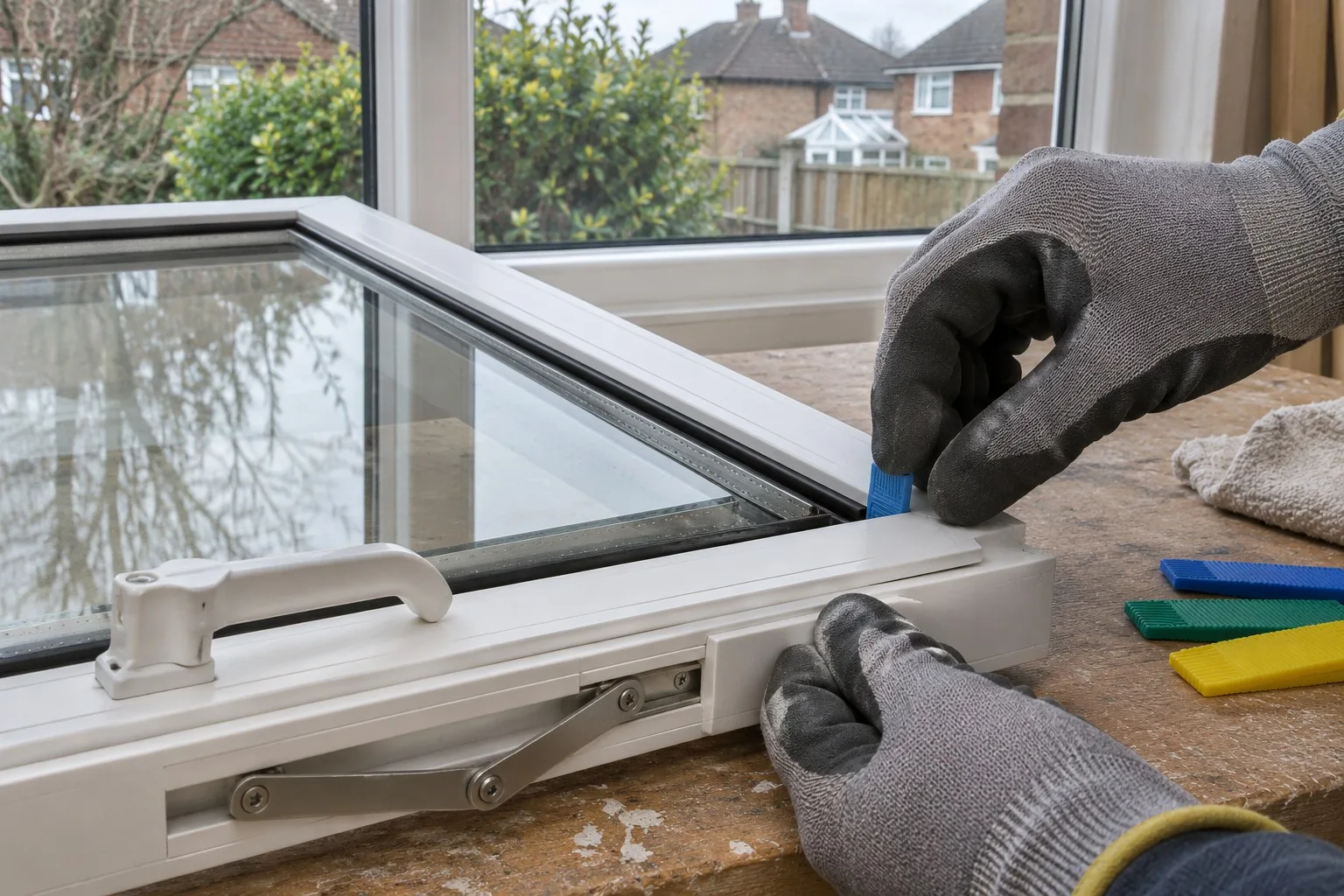
Toe and heel window glazing is how a fitter packs the glass in an opening sash. It stops the weight of the glass pulling the sash out of square. Done properly, a window or door keeps closing and locking for years. Done carelessly, the sash drops sooner or later, and it starts to rub and stop locking.
What toe and heel window glazing means
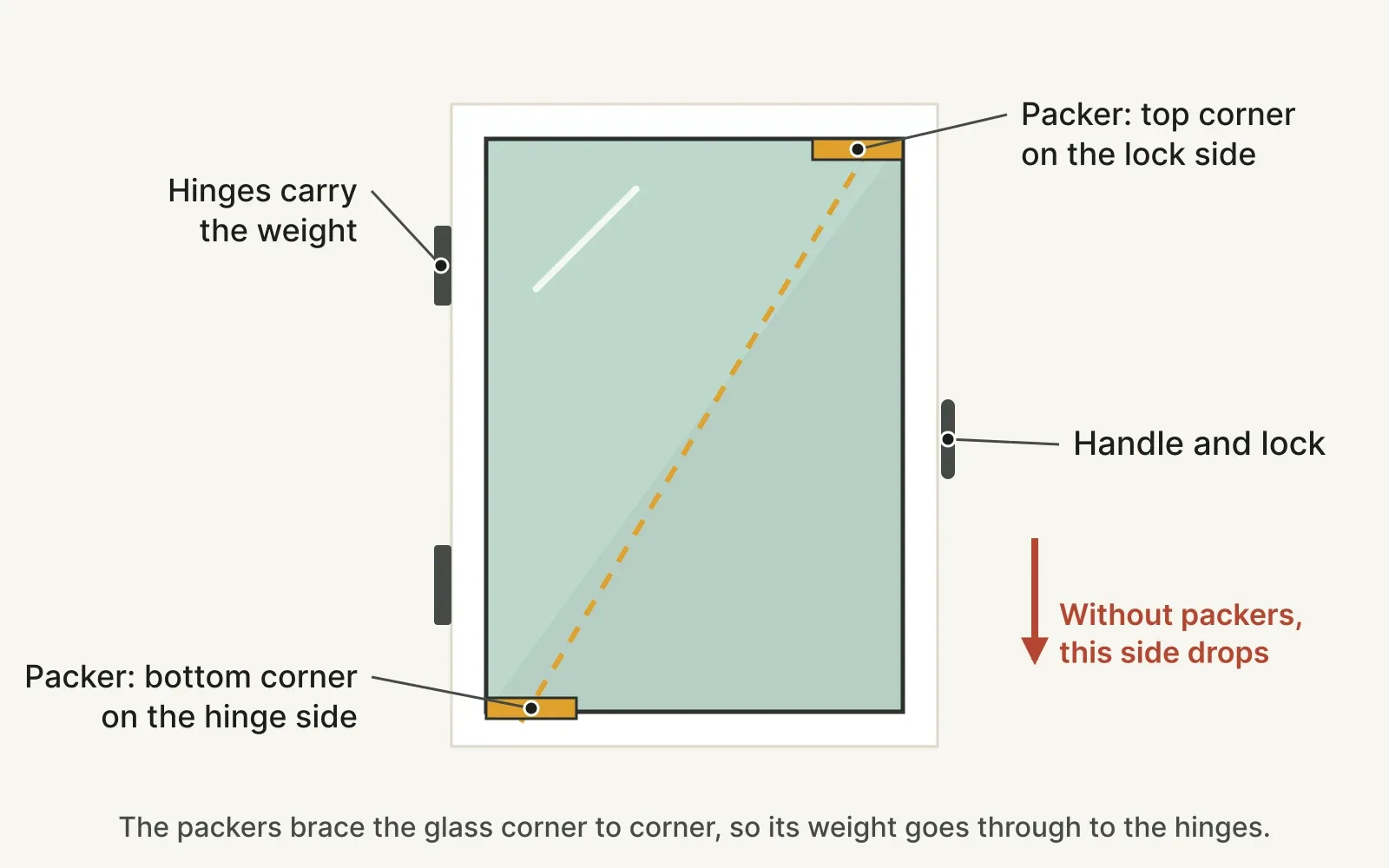
A sealed unit is heavy. In a uPVC opening sash, the hinge side carries the weight when the sash is open. Nothing on the lock side holds it up. Without the right packing, that side drops.
To stop it, the fitter braces the glass diagonally, corner to corner. Plastic packers slip into the gap between the glass and the frame, under the beading. On the hinge side the packers go in the bottom corner. On the lock side they go in the opposite, top corner. Picture the back of a wooden side gate. The diagonal brace on it stops the gate dropping on the latch side, and toe and heeling does the same job inside the sash.
Toe and heel on a window or a door
The installation guides I have read, from two door suppliers, describe toe and heeling for doors. A door supplier’s toe and heel guide says the packing lets the glass carry its own weight, so the sash doesn’t catch and the locking points stay aligned. A single door installation guide gives the same positions for the packers that I have just described.
Doors drop first because they are heavy. A heavy opening window sash faces the same pull. I haven’t read instructions for windows, though, so I won’t promise the fix is identical. Ask your fitter how the glass is packed in your windows, and expect them to follow the manufacturer’s glazing instructions.
How to tell if a sash has dropped
The first thing most people notice is that the lock doesn’t work as easily as it did, or won’t lock at all. The sash may also rub on the bottom as it closes. If you look closely, the mitred welds may not line up with the frame at the top and bottom of the lock side.
The easiest check for a toe and heel window problem is to measure the sash corner to corner along both diagonals. The two measurements should be near enough the same, within a couple of millimetres. A difference of a quarter of an inch is too much.
How a fitter should do toe and heel glazing
The beading comes off first, and the unit has to sit on its setting blocks, so the drainage works properly. The fitter then raises the lock side of the sash to square it up again, which the trade calls jacking. Next come the packers, placed in the gap that opens between the unit and the frame to brace the glass across the diagonal. Some doors lift off their hinges when you jack them, and those are harder. This isn’t a job to try on your own door unless you know what you are doing.
A fitter should use the packers the system supplier specifies. If you suspect cheaper substitutes, ask what went in.
Why sashes drop
In my experience, a dropped door is the most common complaint after a new uPVC door goes in, even when the rest of the job looked perfect. I put much of it down to fitters not appreciating how much the packing matters. Another cause is firms that don’t send them back to put it right. A sash that has dropped once will keep dropping. Squaring it up without packing it correctly is only a temporary fix.
What to ask before you pay
Before you accept the work, ask the fitter these questions:
- Will the glass be toe and heeled in every opening sash?
- Which packers are you using, and are they the system supplier’s?
- Will you check the diagonals and the lock before you leave?
- If a sash drops within the guarantee period, who comes back to put it right?
Then check the diagonals yourself once the work is finished, and again after a few months. If a window or door has dropped, ask the installer to return under the guarantee. For what a new window costs, see the guide to a single replacement window, and put any figure through our quote checker. More on how windows are built and how they fail is in windows explained.
VELUX is a trade mark of its owner. The Window Man is independent and is not affiliated with, sponsored or endorsed by any manufacturer. We name brands only to help you compare like with like; see how we make money.
Get quotes for your home
A guide price only takes you so far. Local firms can price the work on your own home, and comparing a few quotes is the quickest way to see what is reasonable.
Compare free quotes