Windows explained
Sealed units in wooden frames
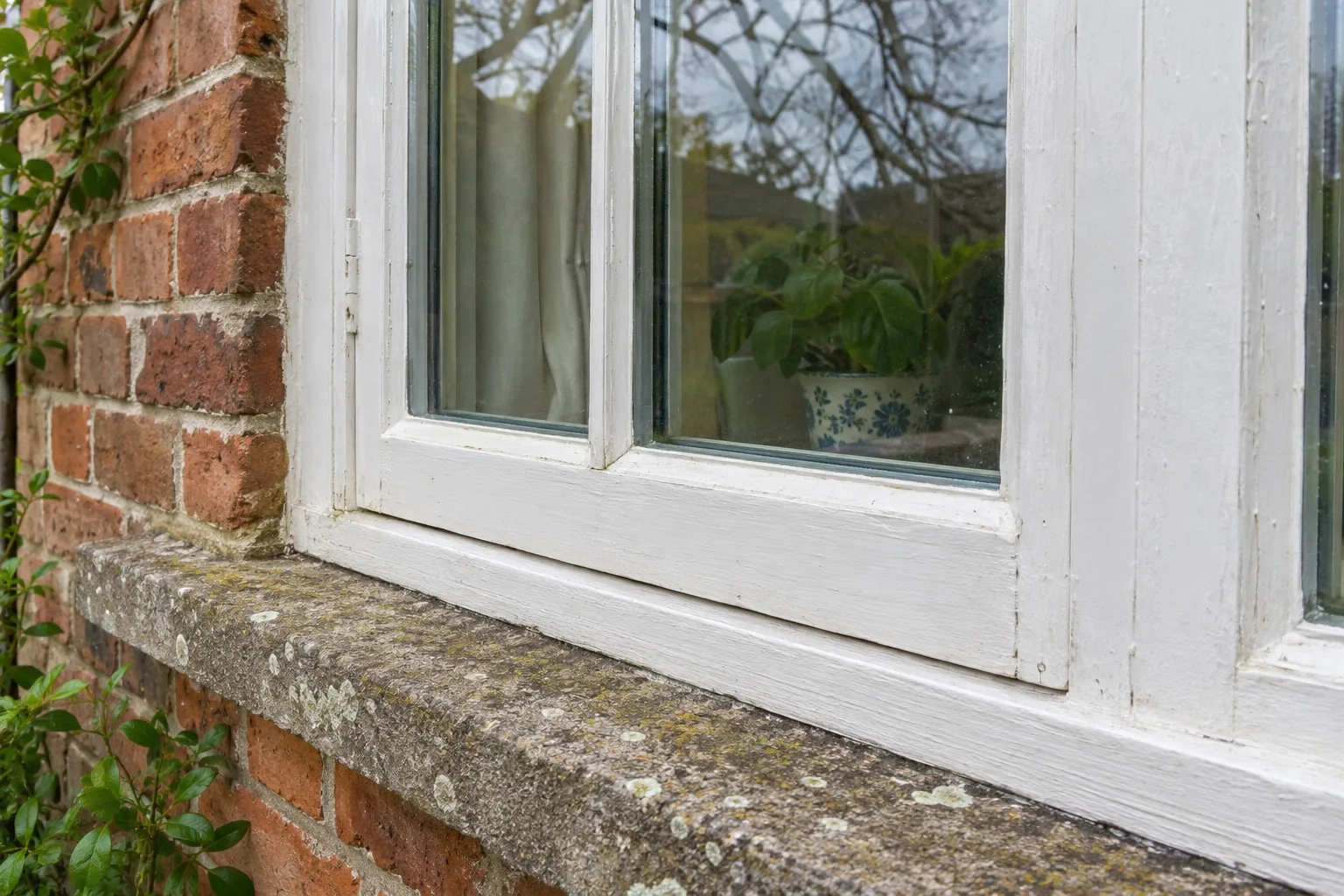
Double glazed sealed units in wooden frames fail early for one reason I see again and again: water gets into the glazing rebate and has nowhere to go. The unit sits in a damp channel, the edge seal gives up, and the glass mists long before it should.
How a sealed unit fails
A sealed unit is two panes of glass bonded together round the edge. It starts with dry air or gas inside, and it stays clear only while the edge seal holds.
When the seal develops a fault, and it may be no more than a pinhole, moisture works its way in. Even on a warm summer day the air carries moisture, and each change in the weather draws a little more through the breach. As the temperature drops, that moisture condenses on the inside of the glass and has no way out. I have seen units with several inches of water lying at the bottom, because a failed unit behaves like a small tank.
Nobody can clean a failed unit and put it back together, because manufacturers don’t build them to come apart. The old glass is usually scrapped and a new unit goes in.
Why sealed units in wooden frames fail early
Frames made of uPVC or aluminium normally have drainage slots built in, so any water that reaches the glazing channel runs out again. Wooden frames often don’t. The ones I see have the unit bedded in the rebate with no drainage and no ventilation round its edge, so the water that gets in stays put.
LABC Warranty, which inspects and insures new homes, describes the same problem in its guidance on timber windows. Water gets into the space between the glazing and the frame and sits there, often for a long time. In winter it can freeze and damage the unit’s seals, and the mist only shows in spring, so a unit can fail months after the damage was done. Their technical note on water ingress around glazing is written for developers, but the physics is the same in an old bungalow.
How the glass should sit in a wooden frame
A unit in a wooden frame needs to be drained and ventilated. In practice that means five things:
- Setting blocks. The unit sits on blocks at intervals, so it never rests in the bottom of the rebate.
- A drainage gap. There should be a path of about 5mm all round the unit, between its edge and the rebate, so water can run down to the bottom.
- A way out. The bottom bead and the rebate need a drainage slot to the outside, and the rebate should slope towards it.
- Dry glazing. A gasket or glazing tape against the glass replaces fully bedded putty.
- Square beads. LABC advises cutting the beads square rather than mitred, because mitred corners open up and let water in.
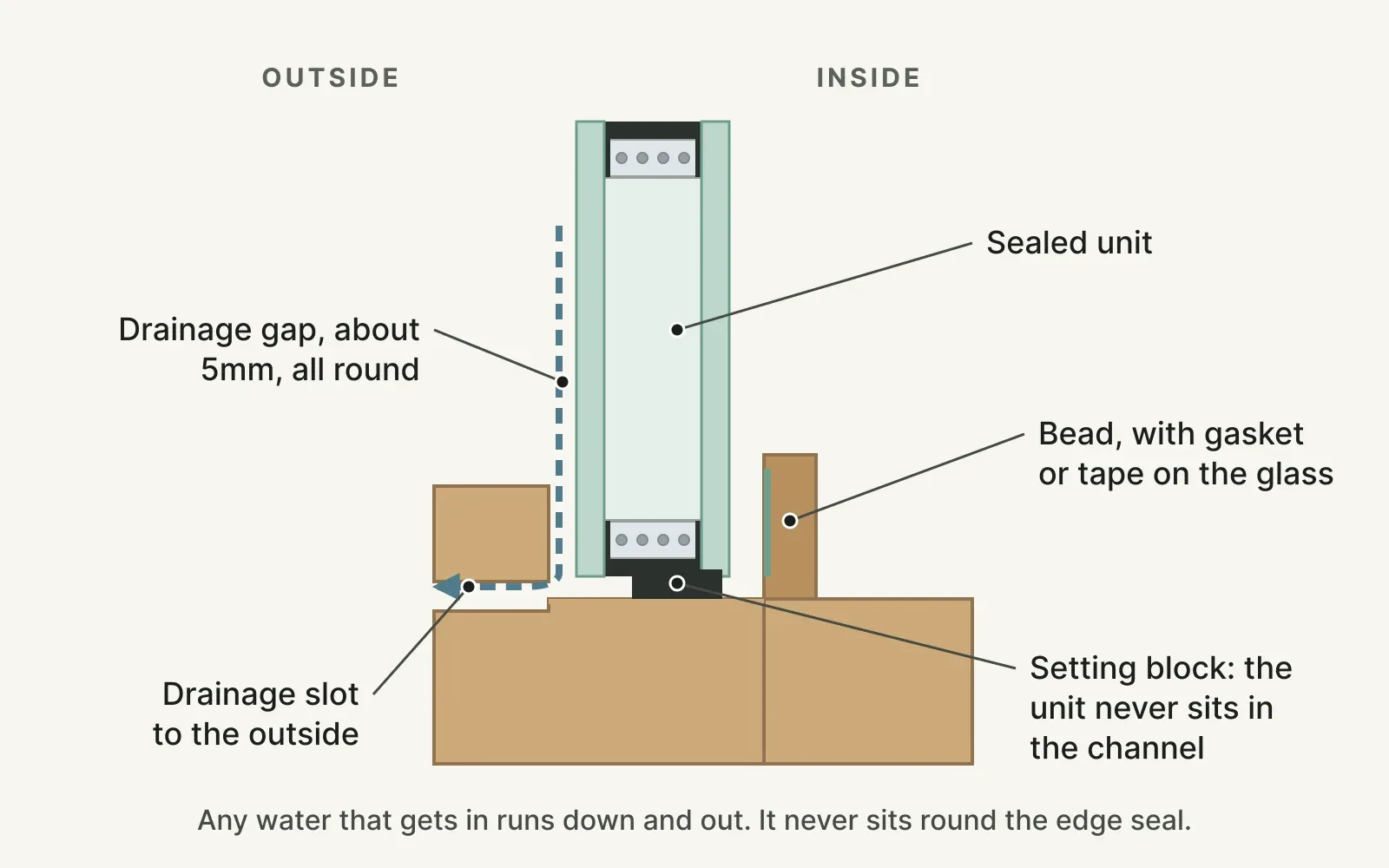
A frame made for double glazing has all of this built in. A frame made for single glazing usually doesn’t, and that is where I see the trouble.
Where sealed units in wooden frames go wrong
Most of the early failures I see come from three causes.
First, the unit has been fully bedded in the rebate, often with the wrong compound. In my view only a non-setting butyl compound is suitable for bedding a unit. If nobody has primed the bare wood, it soaks up the oils from the putty, which then dries hard and lets water in round the edge.
Second, the rebate is too shallow. Many wooden frames were made for single glass, so there is no room for a thicker unit, the gap round it and a proper bead. Fitting a double glazed unit and puttying it in like single glazing is asking for trouble.
Third, nobody maintains the frame. A frame that looks sound can still let water into the rebate through cracked paint or open joints. Units glazed this way often start to fail within six to eight years of fitting, and the owner is surprised because the frame still looks good.
Keeping water out of the rebate
Looking after the frame is the cheapest way to protect sealed units in wooden frames. Keep the paint or stain sound, especially where the glass meets the wood on the outside.
Where the unit is bedded and puttied in, I recommend a clear silicone sealant along that joint, not cheaper mastic. That is my practice and not a rule, and I need to be careful with it. LABC’s guidance warns against using sealant where the glazing system wasn’t designed for it, and against mixing methods. If your frame has a drained and ventilated system, never seal over the drainage slot or the gap under the bottom bead. If you aren’t sure which type you have, ask your fitter before you reach for the sealant.
Don’t jet-wash the windows either. LABC notes that a jet wash can force water into the rebate.
Replacing sealed units in wooden frames
If the frame is sound and only the unit has failed, a replacement costs far less than a new window. The fitter measures the old unit, orders a new one to the same specification and fits it on a second visit. Our guide price for sealed unit replacement is for a standard casement, typically £170. A wooden frame that needs its beads, putty or rebate put right can cost more, so ask the fitter to itemise the work.
If the frame is rotten, warped or past repair, replace the window instead, because a new unit won’t last in a bad frame. The guide to a single replacement window shows what that costs.
What to ask for before you pay
When you get a quote to replace double glazed units in wooden frames, ask these five questions:
- How will the new unit be drained and ventilated, or is it being bedded in putty?
- Will it sit on setting blocks, with a gap round the edge?
- Is the rebate being checked, primed and put right where it is damaged?
- What gasket, tape or compound is going in, and what will seal the beads?
- What is the guarantee on the unit, and who stands behind it?
Then put the figure through our quote checker to see whether it is reasonable for your area. For how the glass itself is built, see the air gap between the panes, and the rest of windows explained.
VELUX is a trade mark of its owner. The Window Man is independent and is not affiliated with, sponsored or endorsed by any manufacturer. We name brands only to help you compare like with like; see how we make money.
Get quotes for your home
A guide price only takes you so far. Local firms can price the work on your own home, and comparing a few quotes is the quickest way to see what is reasonable.
Compare free quotes