Windows explained
Exploding double glazing
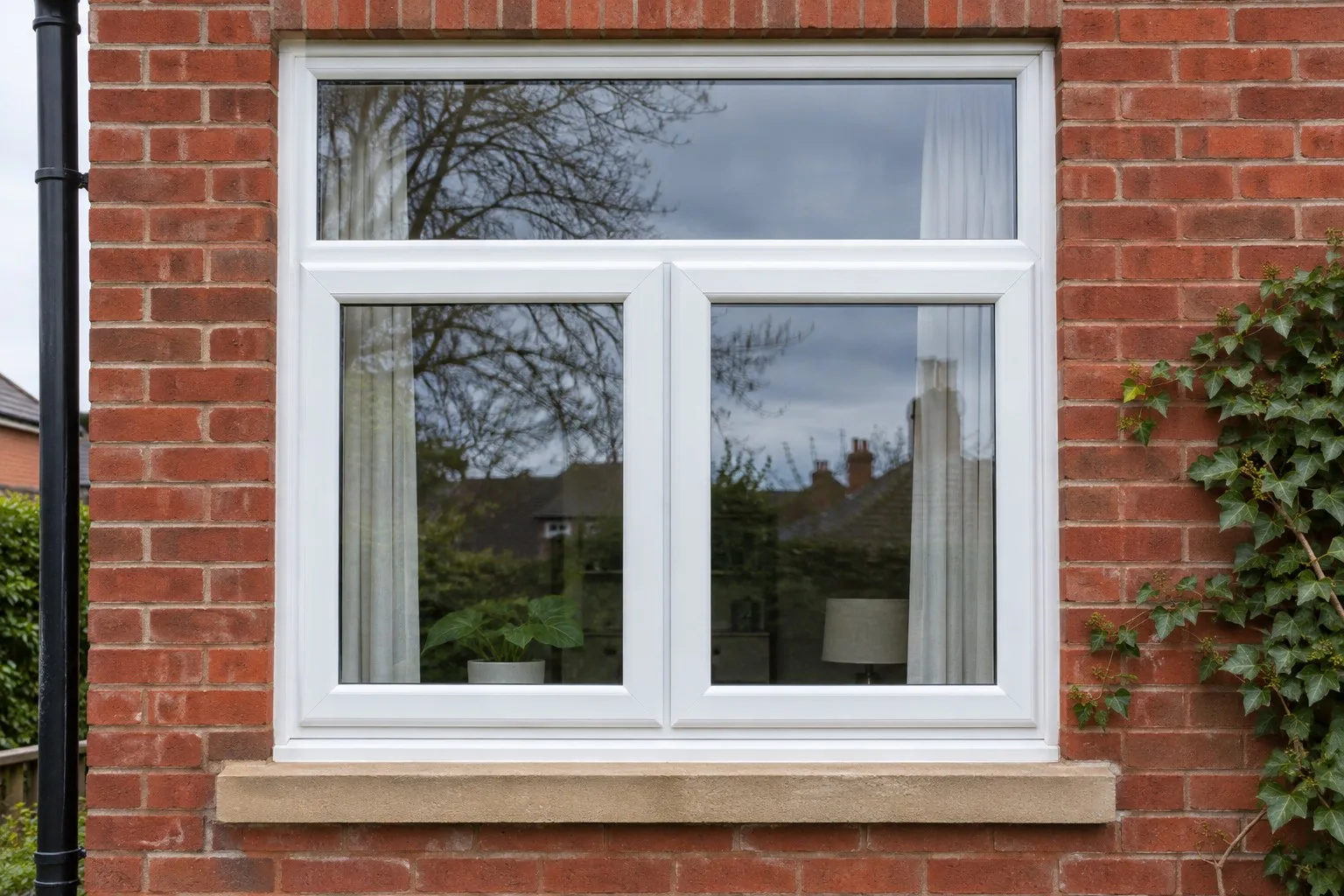
Exploding double glazing is rarely an explosion. A pane cracks or shatters with a bang when nobody has touched it. Nearly always, heat and cold have put the glass under stress. I see it most often as a crack along the length of the unit, with the unit dished inwards, so I’d call it an implosion. You can’t always prevent it, but you can understand why it happens and reduce the risk.
When exploding double glazing happens
In the UK, I see it most often between late October and early February, and mostly from late December to mid-January. That is when the difference between inside and outside is greatest, and when low winter sun falls on cold glass.
Why exploding double glazing happens: thermal stress
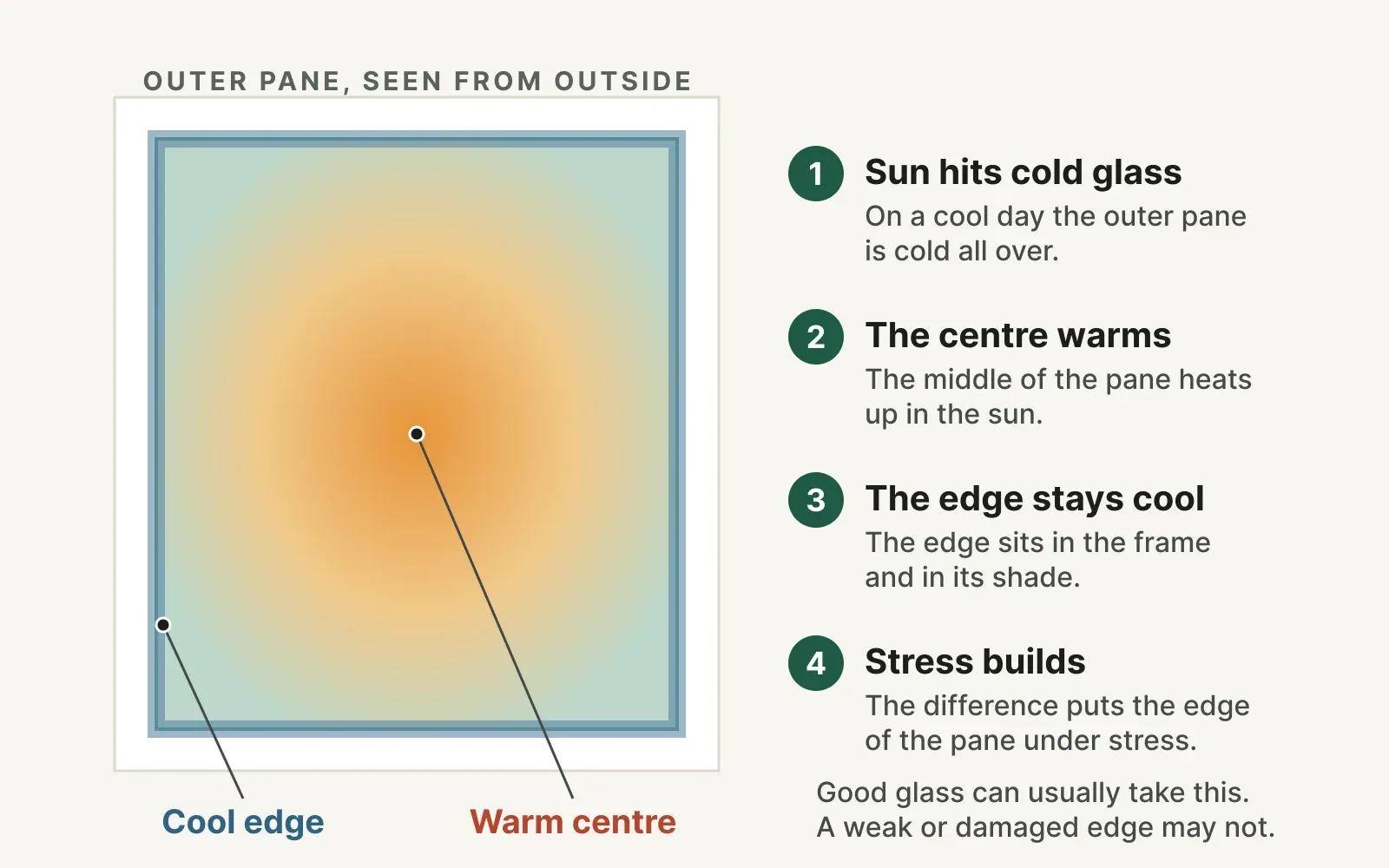
Both panes of a sealed unit can take thermal stress. A Canadian National Research Council digest, Potential for thermal breakage of sealed double-glazing units, explains how. The stress builds at the edge of a pane when the edge is cooler than the centre. On its own it shouldn’t break good glass. The pane gives way when the stress adds to other stresses in the glass, or the glass is weak or damaged.
There are two common patterns:
- The outer pane, from sun. On a cool day the outer pane is cold. When the sun suddenly hits it, the centre warms up while the edge stays in shade, and the pane is under stress.
- The inner pane, from heat inside. When it is very cold outside, the room heating can warm one part of the inner pane. The centre is then warmer than the edge.
What makes it worse
The digest lists several things that raise the stress, and most of them are about how the window is used:
- Low-emissivity glass. A unit that insulates better also puts more stress on the panes, so it needs more care.
- Light-coloured curtains or blinds close to the glass. They reflect sunlight back into the outer pane and warm it more.
- Blocked airflow. Anything that stops air moving over the glass lets the centre heat up faster.
- Deep reveals or shading over the edge of the unit. These keep the edge cool while the centre warms.
- Heaters under the window. Curtains on the room side of a radiator trap hot air against the inner pane. A heater that blasts at full power after a long off period heats the centre far faster than the edge.
What you can change at home
You can’t change the weather, but you can change how the window is treated:
- Hang curtains between the radiator and the window, not on the room side of it, with a gap at the top and bottom for air to circulate.
- Direct fan heaters away from the glass.
- Keep the room temperature fairly even. The digest prefers a heater that adjusts its output over one that switches between off and full power. With the second kind, the glass cools down while the heater is off.
- Keep blinds clear of the glass, so air can move behind them.
Other causes I suspect
Some factors come from my own work and reading in the trade, and I can’t point you to a standard for them, so treat them as questions for the manufacturer and not as established fact. Units that are much wider than they are tall seem to be at most risk. I also suspect that the way a unit is made can leave it with lower pressure inside. That would make it flex inwards more in a cold snap. The material in the spacer bar may also play a part. A unit with mismatched panes strains the thinner one, and thicker glass on both sides flexes less.
What to do when it happens
A unit hit by exploding double glazing can’t be repaired, so it has to be replaced. Until then, keep people clear of the glass, because pieces can drop out. The guide price for sealed unit replacement is typically £170, and the price guide is for a standard casement. Check your home insurance and the guarantee on the unit before you pay for the replacement yourself.
If the same window breaks again, ask these questions:
- Does the unit manufacturer understand low-deflection desiccant, and do they use it?
- Would a stronger glass specification, such as thicker panes, suit this window?
- How are the heating and the curtains arranged near this window?
- Is there anything about its position, such as strong sun on a south-facing pane, that could be changed?
Then put any quote through our quote checker. For the other way a sealed unit fails, see sealed units in wooden frames.
VELUX is a trade mark of its owner. The Window Man is independent and is not affiliated with, sponsored or endorsed by any manufacturer. We name brands only to help you compare like with like; see how we make money.
Get quotes for your home
A guide price only takes you so far. Local firms can price the work on your own home, and comparing a few quotes is the quickest way to see what is reasonable.
Compare free quotes