Windows explained
Sealed units explained
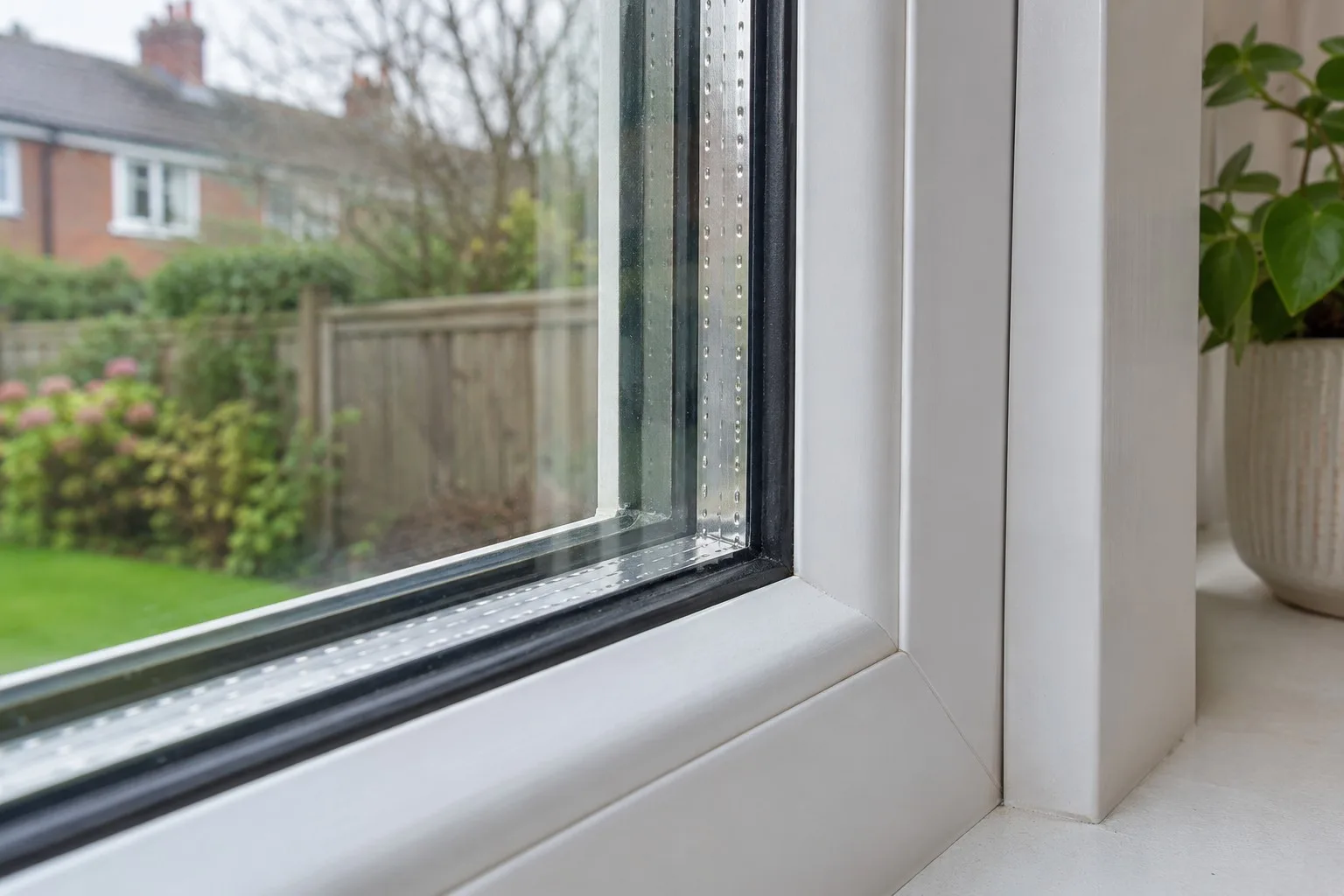
Sealed units are the double glazed panels of glass that sit inside a window frame: two panes held apart by a spacer, with the gap sealed round the edge. Most of what goes wrong with double glazing goes wrong with the unit, so it helps to know how one is built and what its faults look like.
How sealed units are built
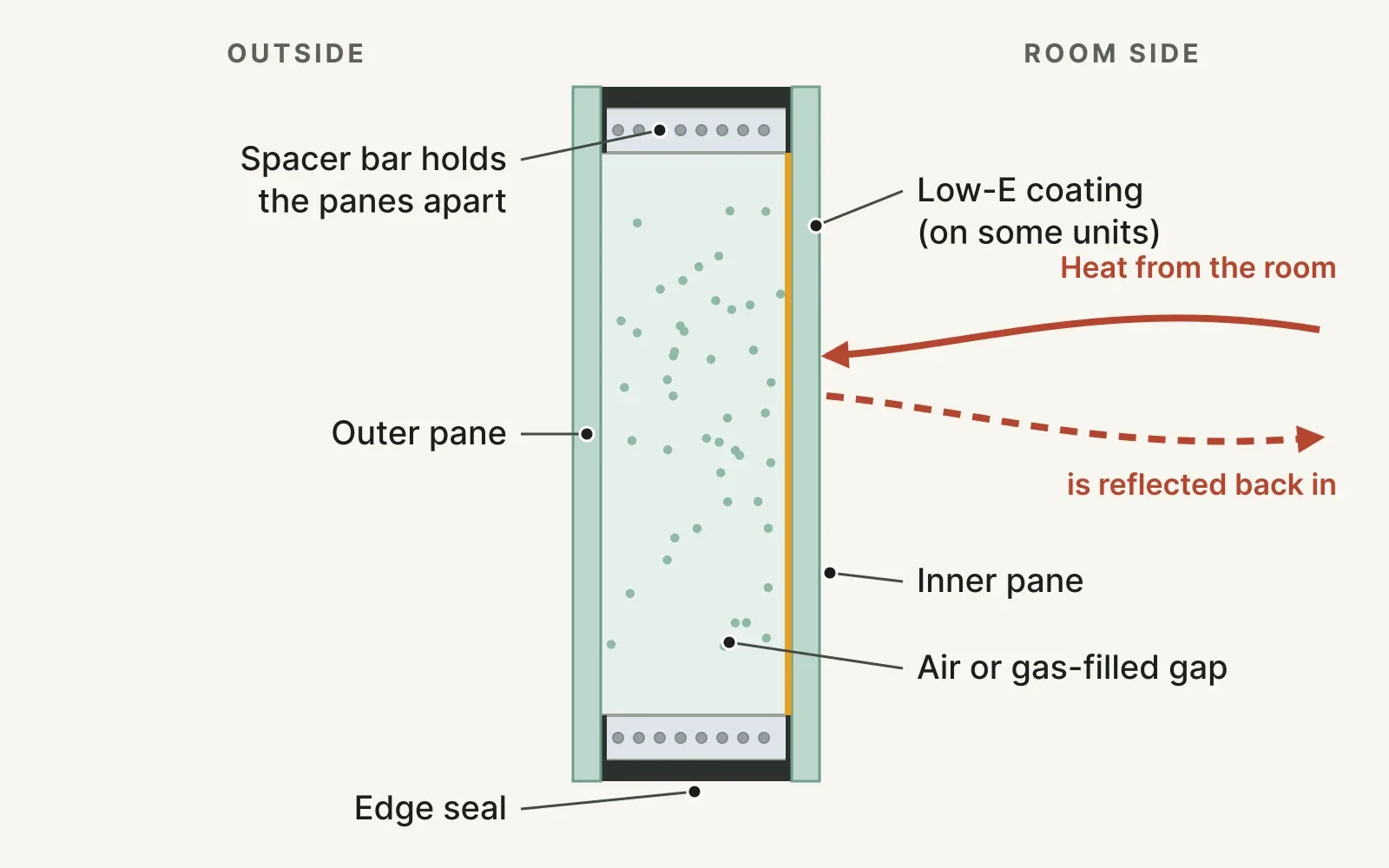
A sealed unit is two panes of glass with a gap between them, sealed all the way round. Sheerwater Glass, a glazing firm, says the gap is typically filled with air or an insulating gas. Glass conducts heat well, and a still layer of air or gas conducts it badly. The gap does the insulating, which is why the unit is sealed at all.
The seal is the weak point. Everything below comes back to what happens when it fails. For how wide the gap should be, and what the gas does, see our guide to the double glazing air gap.
Why sealed units mist up
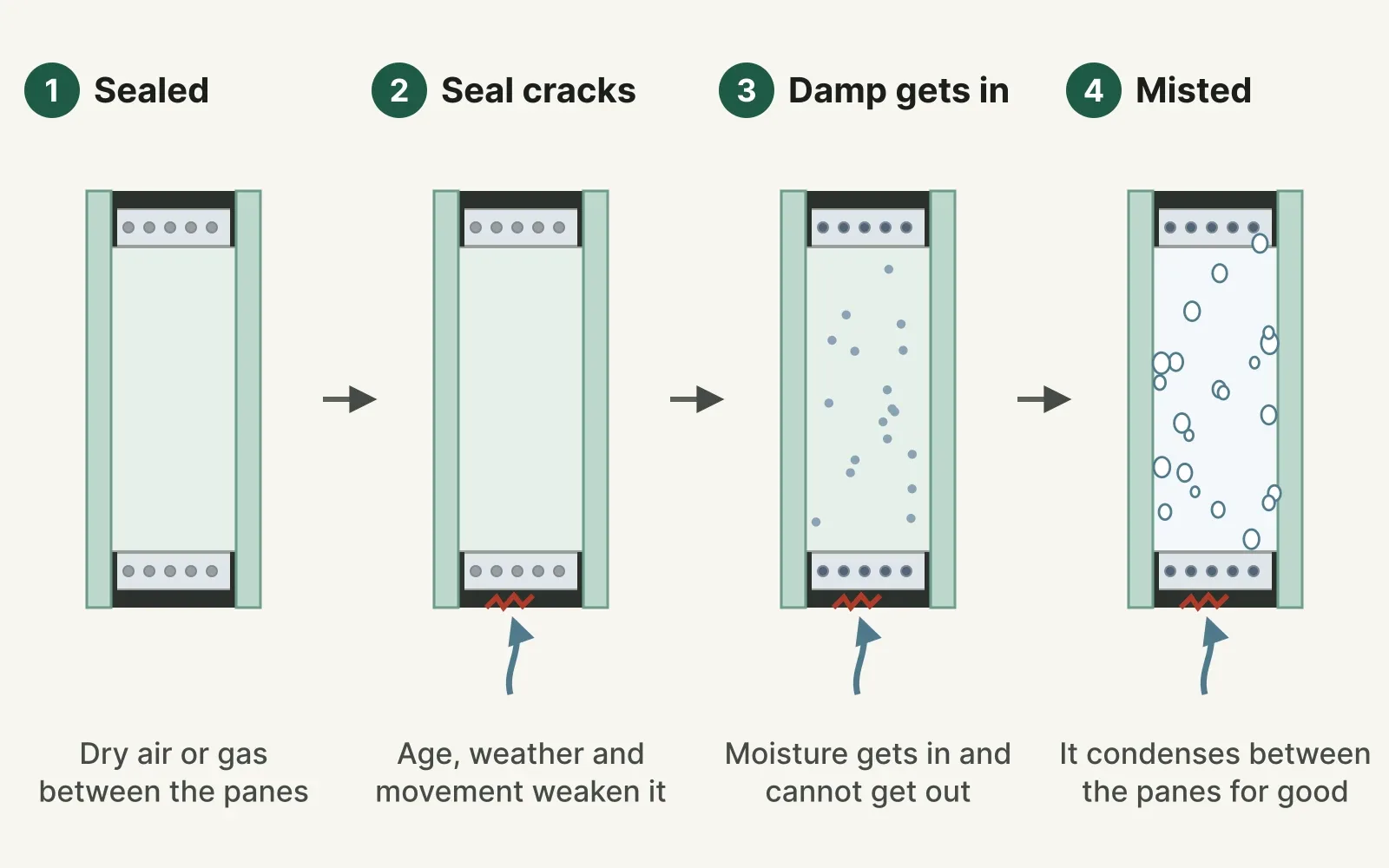
Misting means the seal has let moisture in. Sheerwater explains that over time the seal can weaken or fail, so outside air and moisture get into the gap. Once moisture is trapped there, it condenses on the glass and you see a haze or droplets between the panes. In the trade we say the unit has “broken down”.
Cleaning won’t touch the moisture, because it is inside. It may only show on a warm day at first, when the sun draws the moisture up. In a bad case I have seen water collect at the bottom of a door unit and slosh about when the door opened.
Sheerwater lists age, weather exposure and installation problems or frame movement as causes. In my experience it comes down to three things: how the unit was made, how the frame was made, and how the unit was fitted into the frame. Strong chemicals can attack the seal too. Washing-up liquid is one I have seen blamed, and I can’t point you to a test that proves it. Wooden frames add their own risks, covered in sealed units in wooden frames.
An early warning in coloured glass
When I walk up to a house with coloured leaded lights, I look for greens that have turned blue. In my opinion that is a sign the seal has started to go, even before any moisture shows. This is my own observation, not something I can cite.
What to do about misted sealed units
You replace the unit, and you usually keep the frame. Sheerwater says that in most cases the whole frame doesn’t need replacing, because the glass unit can be replaced on its own. Nobody can take a factory-made unit apart and fix it, because the glass is bonded together. Treat any product that promises to clear the mist with caution.
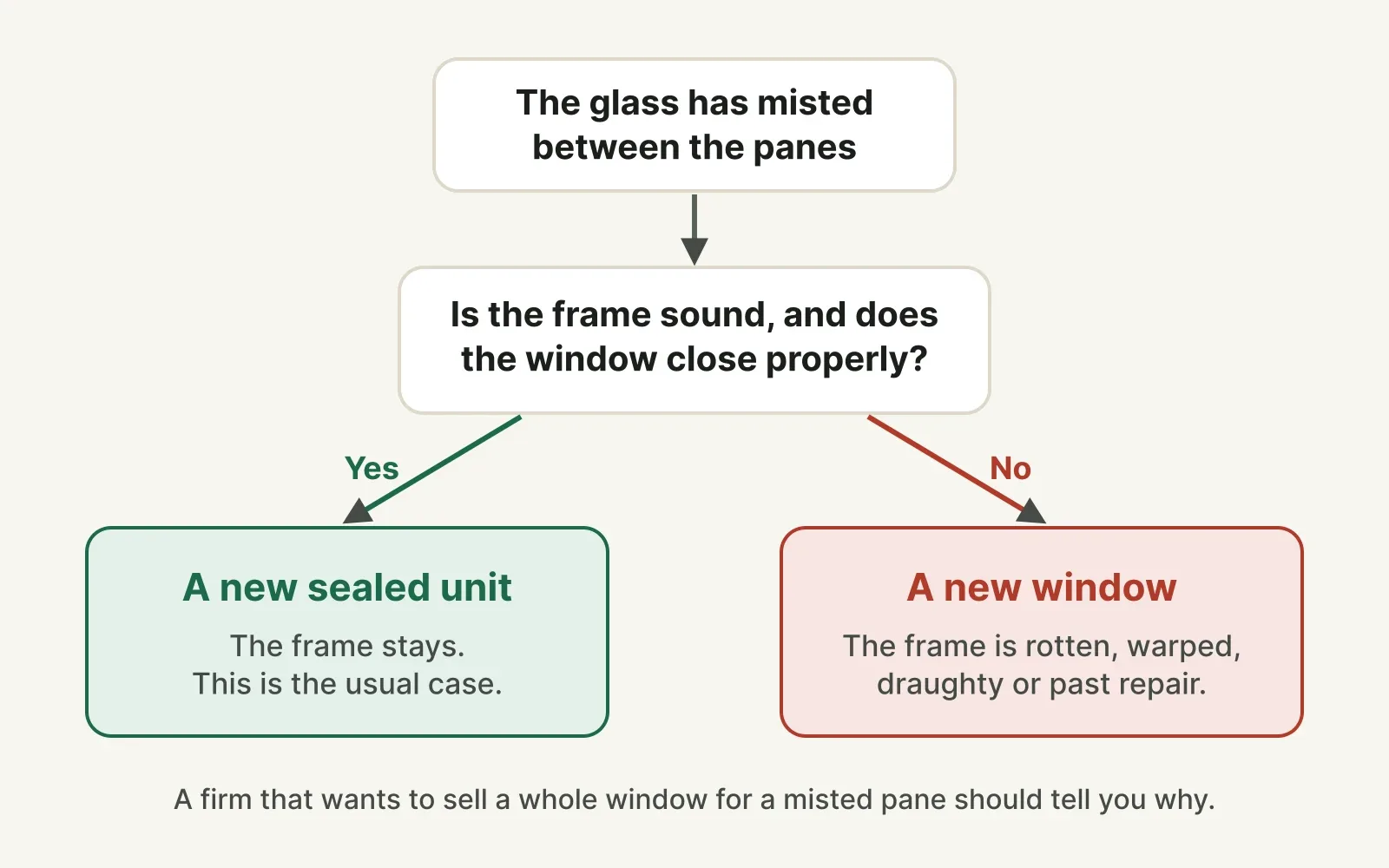
A new unit restores the clarity. It also restores the insulation, because once the seal has failed the unit insulates less. Our price guide for sealed unit replacement shows what it costs, and the quote checker tells you whether a quote is in line. Before you pay, check the guarantee. A failed seal is exactly what many guarantees cover.
Do sealed units contain a vacuum?
No. The space between the panes holds air or gas. It isn’t deliberate, but many units end up with slightly lower pressure inside than the air outside. That can make the glass look dished, with the panes curving inwards a little. It happens as a side effect of how the unit is sealed.
Large units are the most likely to have it. If a big pane lies flat on a bench while it is sealed, the top pane sags, and the pressure inside is lower when the last edge is closed. I’m told that makers deal with this in one of two ways. One is to pull the sag out with a suction pad before sealing. The other is to seal most of the edge, stand the unit upright to let the pressure equalise, and then close the last bit. That is the old explanation I was given, and I haven’t read it in a published standard.
A slight difference does no harm. A large one stresses the glass, and can contribute to the unit breaking in cold weather. See exploding double glazing for what that looks like.
Other things people mistake for a fault
- Grey or coloured bands that move when you press the glass are an optical effect. See Brewster’s fringes.
- Cracks and loud bangs are covered in exploding double glazing.
- Sealant and gaps round the frame are not the unit at all. See our guide to window sealant.
For the types of glass, and which panes must be safety glass, see windowstoday.co.uk’s guide to safety glass.
What to ask when you are buying sealed units
- How long is the guarantee on the unit, and does it cover the seal failing?
- Who issues the guarantee, and what happens if the installer stops trading?
- How is the unit fitted, and what gap is left round the edge?
- If it is a replacement in an old frame, has the frame been checked first?
See windows explained for the rest of how a window goes together.
VELUX is a trade mark of its owner. The Window Man is independent and is not affiliated with, sponsored or endorsed by any manufacturer. We name brands only to help you compare like with like; see how we make money.
Get quotes for your home
A guide price only takes you so far. Local firms can price the work on your own home, and comparing a few quotes is the quickest way to see what is reasonable.
Compare free quotes