Windows explained
Double glazing air gap
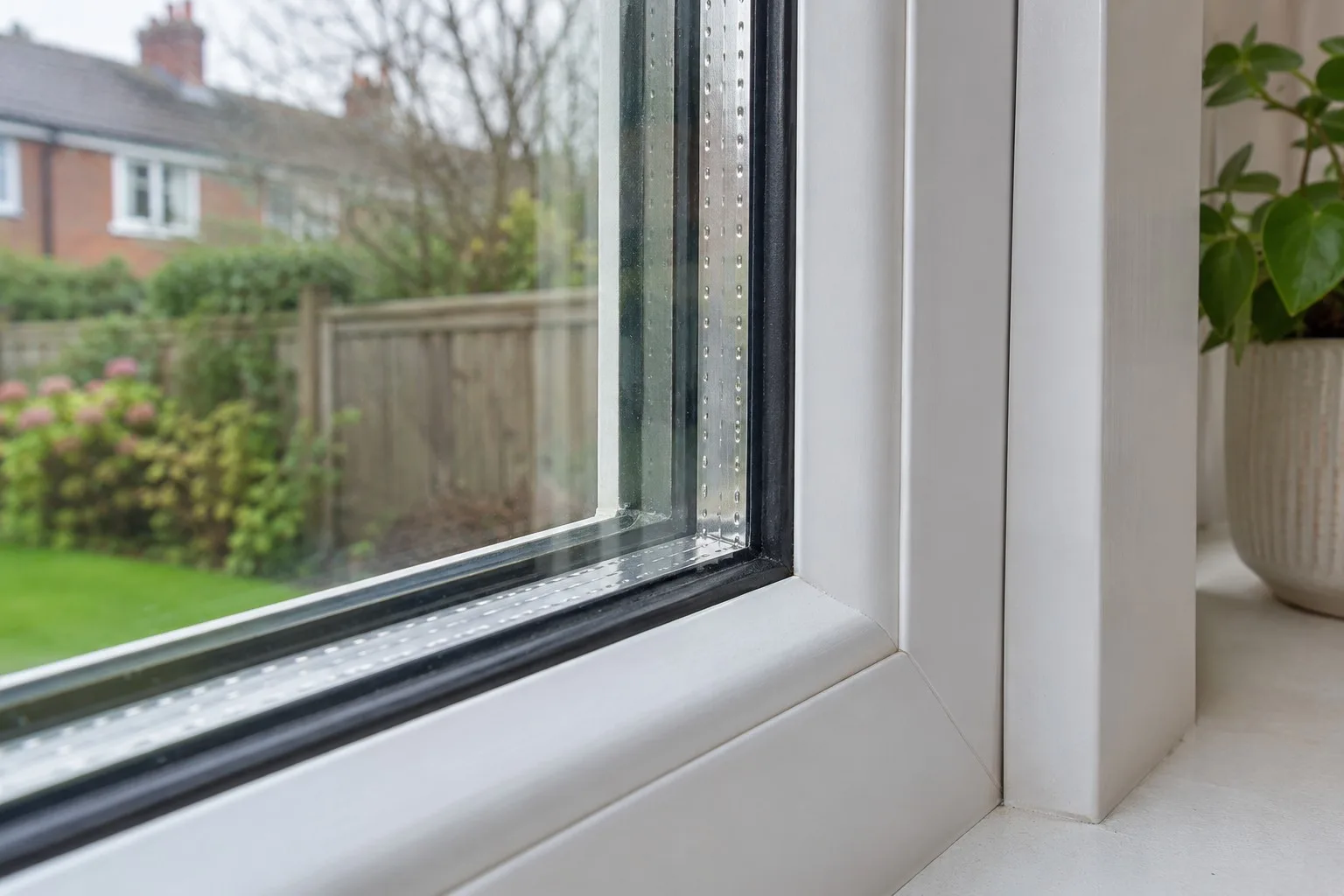
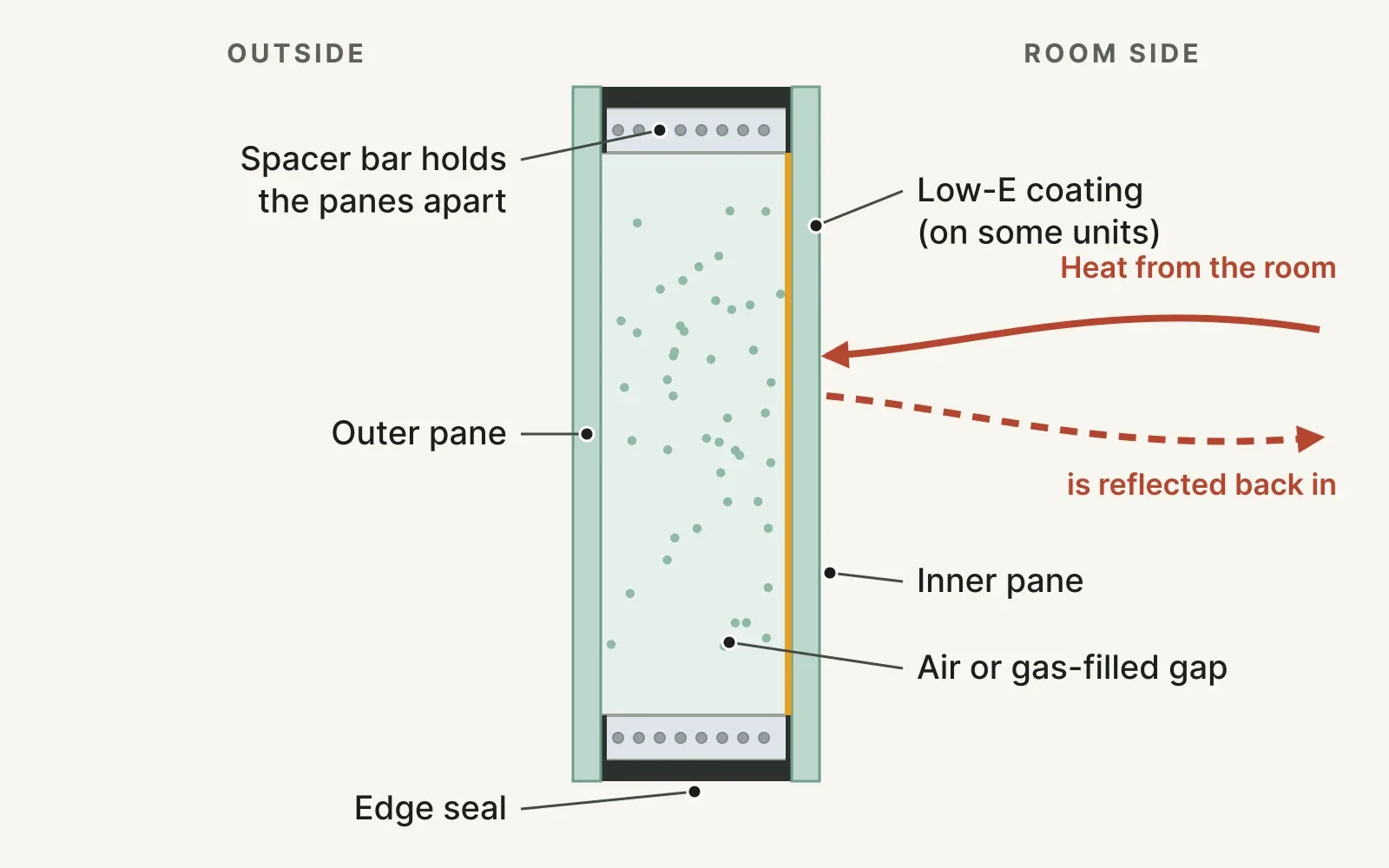
The double glazing air gap is the space between the two panes of glass, and the number you are quoted for it tells you much less about the window than the pitch suggests. A wider gap helps up to a point and then stops helping. What fills the gap, what coats the glass and how the whole window performs matter more, so ask about those.
How the double glazing air gap is described
I talk about the double glazing air gap itself, meaning the space between the panes. The overall thickness of the sealed unit is the gap plus the two panes of glass. So a 20mm gap between two 4mm panes makes a unit 28mm thick, and a 16mm gap makes a 24mm unit. Some firms quote the overall thickness and some quote the gap, which is one reason two quotes can look different when the glass is the same.
Why a wider double glazing air gap stopped helping
Early double glazing used a narrow gap, and it was a big step up from a single sheet of glass. The gap then grew, first wider, then wider again, and each step brought a measurable gain. A bigger number was also easy to sell, and in my experience that is part of why the gap kept growing.
As I understand it, heat crosses the gap in two ways. In a narrow gap it passes by radiation from one pane to the other. As the gap widens, air starts to circulate inside it, rising against the warm inner pane and falling against the cold outer one, and that circulation carries heat across. So past a certain width the benefit levels off, and the best gap depends on what fills it. The glass makers publish figures for each build-up. Compare those figures, not the gap.
What matters more than the gap
Three things change a unit’s performance more than a few extra millimetres:
- The gas. The standard fill is dry air. Pilkington notes that argon and krypton are the usual alternatives, that krypton helps when the space is narrow, and that argon typically improves the centre-pane value by about 0.2 W/m²K depending on the cavity size.
- Low-emissivity glass. A thin coating on one pane keeps more heat in the room. Pilkington’s guidance says it also makes the inner pane warmer, which cuts cold draughts from convection near the window and the risk of condensation on the glass.
- The spacer. According to the same guidance, a warm-edge spacer round the rim of the unit improves the figure further.
You can read all of this in Pilkington’s thermal insulation FAQs. The same page explains the Window Energy Rating, which scores the whole window and not just its glass.
The gas does not last for ever
Gas fill leaks out of any unit slowly, and how full a unit is when it leaves the factory varies. A Georgian bar fitted inside the unit may well hold ordinary air. A European standard, BS EN 1279-3, covers exactly this. Its published title refers to long-term test methods and to requirements for gas leakage rate and for gas concentration. I haven’t read the standard itself, so I won’t quote its limits.
My own view is that argon is probably better than none, but I wouldn’t pay much for it. Nor would I choose a supplier on whether the units are argon-filled.
Which double glazing air gap I would choose
For what it is worth, I prefer a 16mm gap for its all-round insulation and its expected life. In practice almost everything I fit is a 28mm unit, because that is what customers ask for, and I’m happy with it. The unit also has to fit the frame, so a thicker one isn’t an option for every window, especially an older frame cut for slimmer glass.
What the rules ask for
The rules look at the window, not at the gap. In England a replacement window has to meet a maximum U-value of 1.4 W/m²K or achieve a Window Energy Rating of band B, as set out in Approved Document L. A registered installer works this out for you. Ask which of the two figures your window meets, and where the number comes from. For more on what a U-value means, see doubleglazing.com’s guide to U-values.
What to ask on a quote
- The unit’s U-value or the window’s energy rating, in writing.
- The gas fill, and whether it is the same in every unit, Georgian bars included.
- Whether the glass is low-emissivity, and what spacer is used.
- The overall thickness of the unit, and whether it suits your frame.
- The guarantee on the sealed unit, and who stands behind it.
Put the price through our quote checker, and compare it with the cost of a single replacement window. A firm that answers with “ours has a bigger gap” and nothing else hasn’t answered. There is more on how sealed units fail in sealed units in wooden frames.
VELUX is a trade mark of its owner. The Window Man is independent and is not affiliated with, sponsored or endorsed by any manufacturer. We name brands only to help you compare like with like; see how we make money.
Get quotes for your home
A guide price only takes you so far. Local firms can price the work on your own home, and comparing a few quotes is the quickest way to see what is reasonable.
Compare free quotes