Buyer beware: double glazing
- Double glazing salesman tacticsWhat to expect from a double glazing salesman: how the pitch works, how to spot a fake discount, your cooling-off rights, and what to check before signing.
- Ways to pay for double glazingThe best and worst ways to pay for double glazing: savings, finance, a deposit on a credit card, and why a cash discount is a warning sign.
- Double glazing advertsDouble glazing adverts promise free windows, big discounts and offers that end tonight. How the wording works, what the rules say, and what to do about it.
- Window specification checklistA window specification checklist for comparing quotes: frame, joints, beads, locks, glass, ventilation and guarantee, and what each should say in writing.
- Bogus double glazing tradersBogus double glazing traders turn up uninvited or hide behind adverts. How to spot the signs, what to do on the doorstep, and where to report a trader.
- How to check a double glazing companyHow to check a double glazing company before you pay: what Companies House shows, why a similar name can mislead, and what else to ask for first.
Buyer beware double glazing is the idea behind this whole site. Most of the trouble with new windows starts before any work begins, and most of it can be avoided by checking a handful of things before you sign. This page sets out what those are, and the guides below go into each in detail.
Buyer beware double glazing: a guarantee from a firm that isn’t there
Of all the problems I see, this is the one that surprises people most. When I ask a customer why they aren’t claiming under the guarantee from the firm that fitted their windows, I hear the same kind of answers again and again. They have been taken over, so it is a different company now. They merged with a parent company. They were bought out and are now part of a group. The new owner hasn’t taken the guarantees on.
I can’t name names, and I wouldn’t on a page like this. But a firm can change its owner, its name and its legal form over the years while keeping the same vans, logo and jingle. To the customer it looks like the same well-known name. It may not be the same company in law, and the company that issued your guarantee may no longer exist.
So before you pay, find out which legal entity is giving you the guarantee, and look at its history. In my view, a firm that has gone bust and reappeared under another name is a warning sign.
What an insurance-backed guarantee is, and isn’t
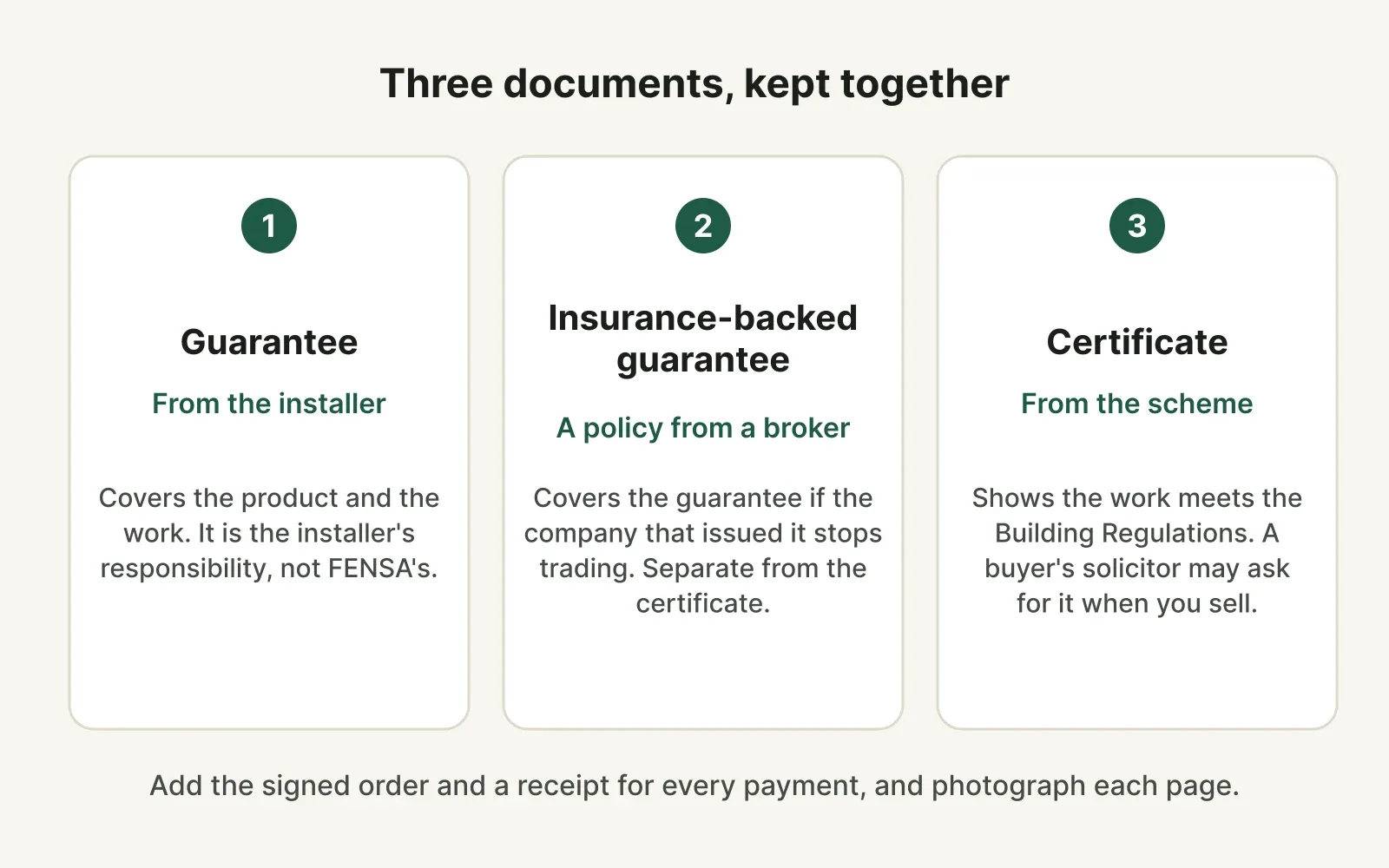
FENSA, the competent person scheme for replacement windows, explains it clearly. An insurance-backed guarantee, or IBG, is an insurance policy that covers a guarantee if the company that issued it ceases to trade. FENSA says it is a mandatory part of a job by one of its approved installers. It also stresses that an IBG is not the guarantee itself. Your installer issues the guarantee, and the IBG sits behind it.
That distinction matters, because the IBG is only as good as the paperwork. Ask to see the guarantee and the IBG documents before you pay, and keep them with your FENSA certificate. The policy is separate from your FENSA certificate and comes from an insurance broker. If you can’t find yours, FENSA says it may be able to help you trace the broker’s details. It has also said that an IT fault meant some homeowners never received an IBG, and it has a form for them to use if the installer has since stopped trading.
Buyer beware double glazing: what to check before you sign
The simplest protection is not to be rushed. The guide to the double glazing salesman explains how the sales pitch works, what a fake discount looks like, and what your cooling-off rights are. In short:
- Don’t sign on the night, however good the “one-off” discount sounds.
- Ask for the quote in writing, with the specification itemised.
- Ask who will fit the windows, and whether they are the firm’s own fitters.
- Compare the price with at least two other written quotes. Our quote checker shows the usual range.
How you pay matters
The way you pay decides what protection you have if the firm fails. The guide to the ways to pay for double glazing covers it in detail. In my view, the safest approach is to pay from savings, keep any deposit small, pay a deposit by credit card so the card company shares responsibility, and be wary of a discount for paying cash.
Make sure the job meets Building Regulations
New windows have to meet the Building Regulations. The Planning Portal says that building regulations apply to all replacement glazing, covering thermal performance, safety, ventilation and means of escape. A registered installer can certify its own work. If you use an unregistered installer or do the job yourself, you can ask the local building control body to check it and issue a certificate of compliance.
So ask the installer how the work will be certified, and keep the certificate. A buyer’s solicitor may ask for it when you sell.
Keep your paperwork
A claim of any kind depends on paper, so keep a folder for the job. It should hold the signed order and the specification you agreed, a receipt for every payment, the guarantee, and the insurance-backed guarantee policy if you were given one. Add the FENSA or other Building Regulations certificate, and the details of the firm, including its full legal name and address.
FENSA’s own advice, if you aren’t sure you have an IBG, is to look carefully through all your paperwork first. That is much easier if you have kept it together from the start, and it is worth photographing each document so a copy survives if the originals go missing.
If something goes wrong
Start by writing to the firm, saying what you want put right and giving it a reasonable time to reply. That is also what FENSA advises. FENSA looks at whether an installation complies with the Building Regulations, and only for jobs by its approved installers. The guarantee is your installer’s responsibility, not FENSA’s, and FENSA says it can’t assist with financial issues.
If the firm doesn’t respond, FENSA suggests asking the installer for its alternative dispute resolution provider, where your complaint may be mediated, or contacting your local Trading Standards office. Citizens Advice also gives free advice on consumer problems. If you paid a deposit or any part of the price by credit card, tell the card company early. As the guide to paying explains, it can share responsibility with the firm.
Guides in this section
The pages in this section take each part of buying double glazing in turn: what the person selling to you is paid to do, how to pay, and what to check once the work is done. Take your time, ask for everything in writing, and put any price through our quote checker before you agree. For how windows are built and how they fail, see windows explained.
Get quotes for your home
A guide price only takes you so far. Local firms can price the work on your own home, and comparing a few quotes is the quickest way to see what is reasonable.
Compare free quotes