After the fit
Lost FENSA certificate: how to replace it
A lost FENSA certificate is usually easy to replace, as long as a FENSA-registered installer fitted your windows. You can find the record and order a copy from FENSA for a fee, without going back to the installer. If nobody registered the job, there is no certificate to find, and the options are different.
How to replace a lost FENSA certificate
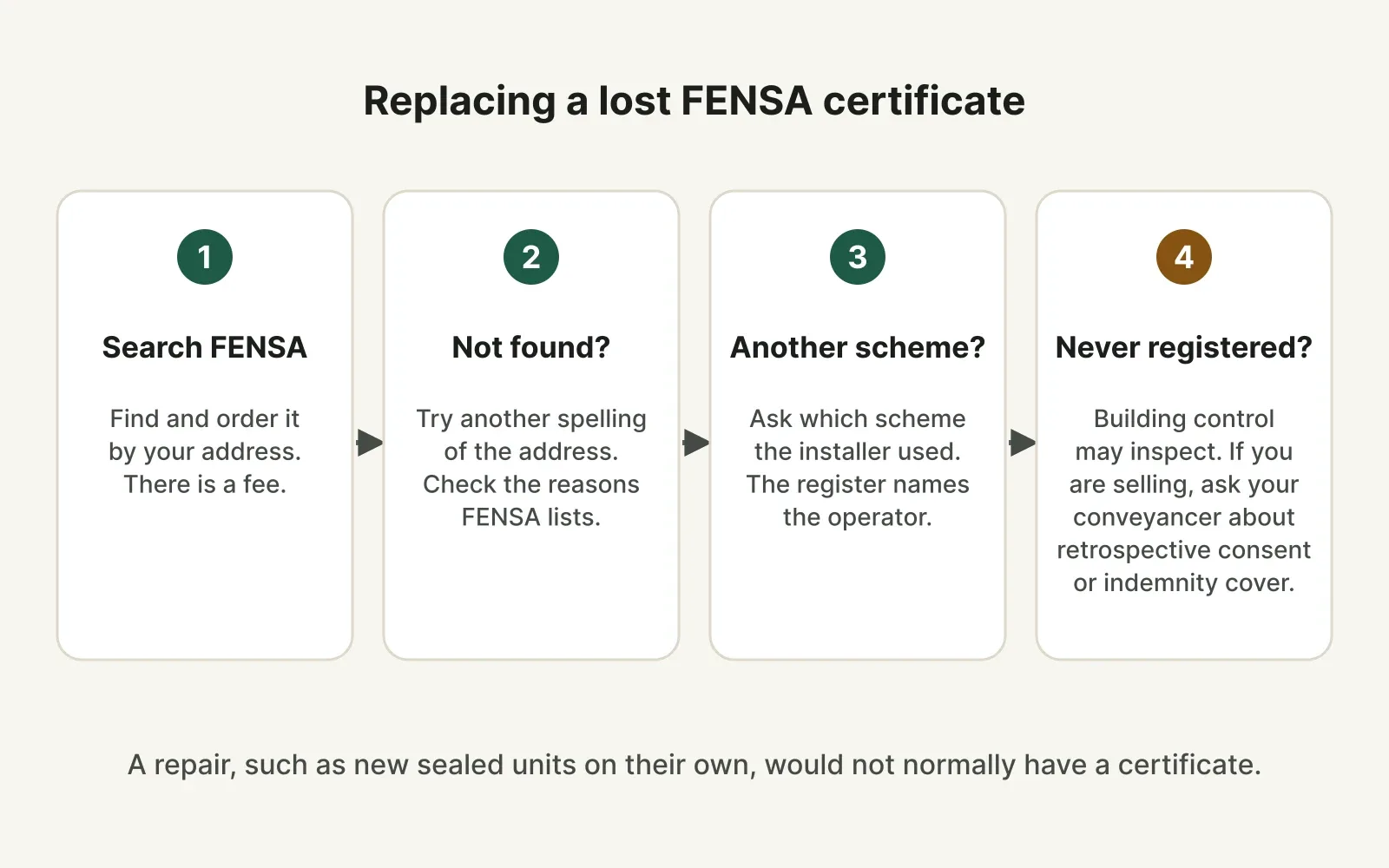
FENSA runs a page where you can find and order your FENSA certificate. You can search by your address, or by the certificate details if you know them. If you pay online, the fee is £30 including VAT, and you need a credit or debit card.
You can pay by cheque instead. The fee is the same, including VAT and an administration charge. You post a covering letter with:
- the full company name and business address of the FENSA-registered installer;
- your full name and the address where the installation took place, with the postcode;
- a different posting address, if the certificate needs to go elsewhere.
That means you need to know who fitted the windows. Look through the paperwork from the job, such as the quote, the invoice or the guarantee.
If FENSA can’t find the certificate
FENSA lists the usual reasons it can’t find a record:
- the address or postcode is wrong;
- the job included more than replacing windows and doors;
- the windows and doors are inside the building;
- the installation company wasn’t a FENSA approved installer at the time;
- the installation company didn’t tell FENSA when the job was complete.
The first is the easiest to fix, so try a different spelling of the address. Another possibility is that your installer belonged to a different competent person scheme. The government’s guide to building work in your home says to contact the scheme operator if you have no certificate within 30 days of the job being completed, and it points to the Competent Person Scheme register for finding the operator.
When there never was a certificate
Sometimes the certificate is lost because it was never issued. Building regulations have applied to all replacement glazing since 1 April 2002, so windows fitted before then won’t have one. A repair doesn’t need one either. A solicitor quoted by HomeBuilding says that repairing broken glass, replacing fogged units or replacing parts of the frame doesn’t need building regulations consent, and FENSA says its certificates don’t cover repairs. So a sealed unit replacement on its own wouldn’t normally have one.
A certificate is missing in a different way when an installer didn’t register the job. FENSA says that if your installer doesn’t offer a FENSA certificate or another building regulations compliance certificate, you may need to pay for an inspection by building control. It warns that if you can’t get the installer back, you may need another to put things right.
Selling a house without a FENSA certificate
When you sell, the buyer’s solicitor will ask about windows fitted since the rules began. HomeBuilding reports solicitors describing the options:
- Retrospective consent from the local authority. It carries a risk that the council takes enforcement action for a breach of building regulations, or requires remedial work first.
- An indemnity policy. This is often the easiest route. It protects you and the buyer financially from enforcement action, though it doesn’t make the windows compliant.
A lender may require one of these, so ask your conveyancer early and don’t leave it to the week before completion.
Keep the certificate this time
Once you have the copy, keep it with your deeds, together with the guarantee and the insurance-backed guarantee policy, if you were given one. Our guide to buyer beware explains how those three documents fit together. For what the certificate is and why you need one, see doubleglazing.com’s FENSA guide.
What to ask when you are buying windows
Before you pay for new windows, ask the installer:
- Which scheme are you registered with, and what is your registration number?
- Who will register the job, and when will I get the certificate?
- Will I also get an insurance-backed guarantee, and who issues it?
- What happens if the certificate doesn’t arrive?
Then put the quote through our quote checker.
Get quotes for your home
A guide price only takes you so far. Local firms can price the work on your own home, and comparing a few quotes is the quickest way to see what is reasonable.
Compare free quotes