Buyer beware
Ways to pay for double glazing
Of all the ways to pay for double glazing, the best is outright from your own savings, and the worst is on finance, especially a deal arranged by the firm selling you the windows. The way you pay also decides what protection you have if the firm goes bust or the work goes wrong. So choose it deliberately, before you sign anything.
The best of the ways to pay for double glazing
If you have spare money put aside, use it and pay in full. It is as simple as that. I say spare because it is sensible to keep some ready money back for emergencies and for any expense that crops up.
The worst of the ways to pay for double glazing
In my view the worst way is any form of finance, and above all a finance deal offered by the company selling the windows. To see the true cost of a loan, multiply the monthly payment by the number of months. Compare that total with the straight price. Over several years the difference can be large.
Offers of interest-free credit or “buy now, pay later” don’t make the cost disappear. Someone pays for the credit the supplier arranges, and in my opinion that cost ends up in the price. Ask for the cash price in writing and compare it with the finance price.
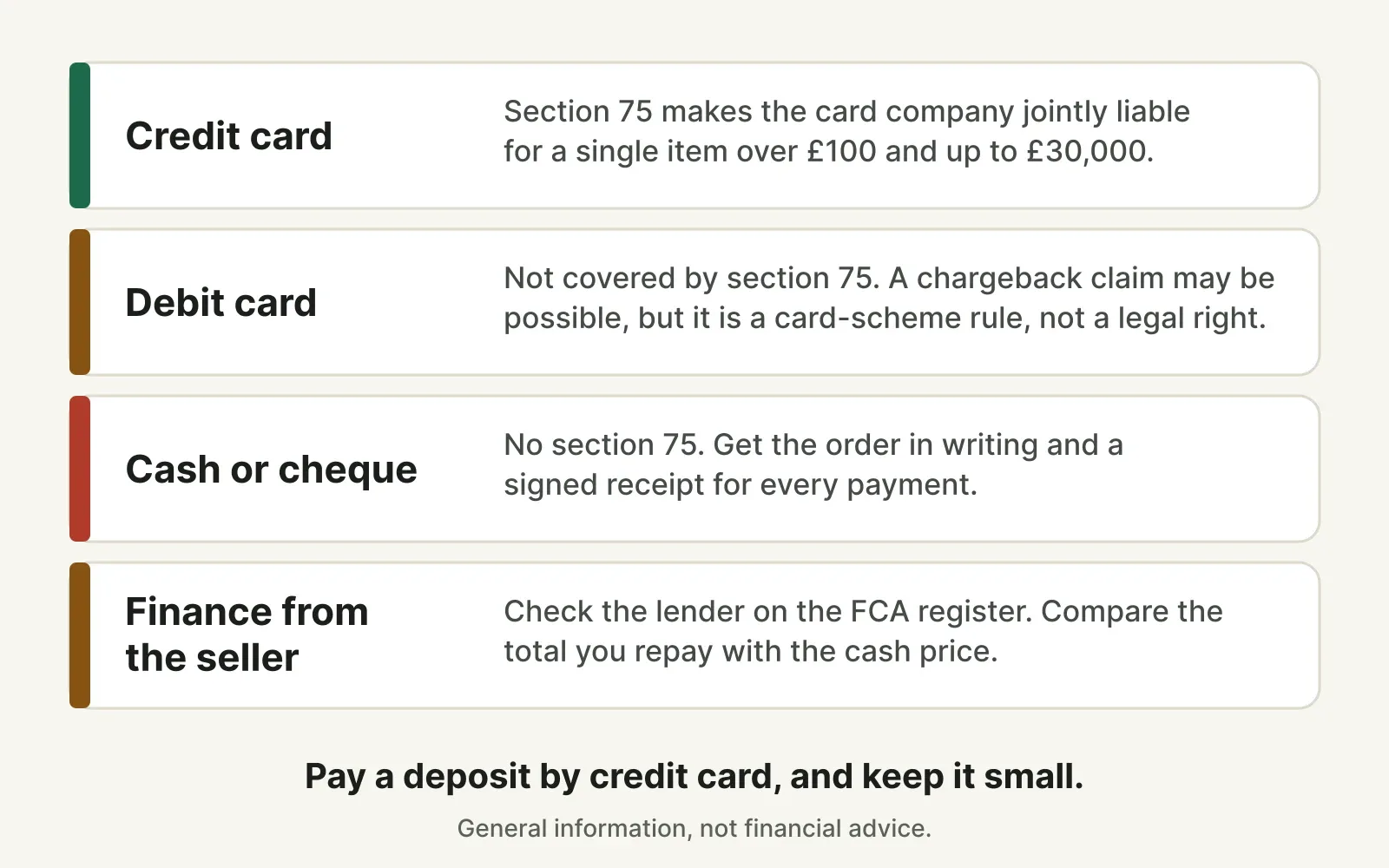
If the firm sells credit, ask who the lender is, and check the lender on the Financial Conduct Authority’s register. Our own guide to spreading the cost shows what a loan adds up to.
A middle ground between the ways to pay for double glazing
If you can’t pay in one go, or don’t feel comfortable stretching yourself, consider asking a close relative for a loan. Offer regular payments over a period you know you can keep to. Offer to repay a little extra over the top, so they don’t lose the interest their savings would have earned. I’d also suggest a very simple letter of agreement.
Some people have no choice but to borrow. If that is you, compare lenders, including your own bank or building society, and look at the total you will repay, not only the monthly figure.
Paying a deposit for double glazing
Pay as small a deposit as you can, or none. In my view a deposit of more than about a tenth of the price is excessive, particularly when you won’t see anything for your money for weeks, or sometimes months. A large deposit can also suit the salesperson as much as the firm, because commission can follow the deposit.
If you do pay one, put it on a credit card. Section 75 of the Consumer Credit Act makes the card company jointly liable with the seller for a misrepresentation or breach of contract, on a single item with a cash price over £100 and up to £30,000. Which? explains that you don’t have to pay the whole amount on the card. The card company is liable even if you paid only part, such as a deposit, and Which? says it is particularly useful if the trader has gone bust.
There are limits. Section 75 covers credit cards, not debit cards, and it doesn’t cover cash or cheques. A debit card may give you a chargeback claim, but that is a voluntary card-scheme rule and not a legal right.
Paying cash for double glazing
For any money you hand over, get the full details of the order in writing and a legible, signed receipt on the company’s headed paper.
To a reputable firm, paying by cash or by cheque should make no difference to the price. If you are offered a lower price for cash, ask why. Often the VAT is being left out, which means no VAT invoice and no paper trail, and your guarantee rests on very little. Some small firms aren’t registered for VAT and genuinely don’t charge it, and that is different from a registered firm offering to leave it off. Ask which it is, and get an invoice either way. Our VAT guide explains how it works on windows.
What to ask before you pay
- What deposit are you asking for, and why?
- Can I pay it by credit card?
- What is the cash price, and what is the finance price?
- Who is the lender, and what will I repay in total?
- Will I get a written order and a signed receipt for every payment?
Then put the quote through our quote checker to see whether the price is reasonable. For what to expect from the person selling it to you, see the guide to the double glazing salesman. This is general information, not financial advice.
Get quotes for your home
A guide price only takes you so far. Local firms can price the work on your own home, and comparing a few quotes is the quickest way to see what is reasonable.
Compare free quotes