Buyer beware
Window specification checklist
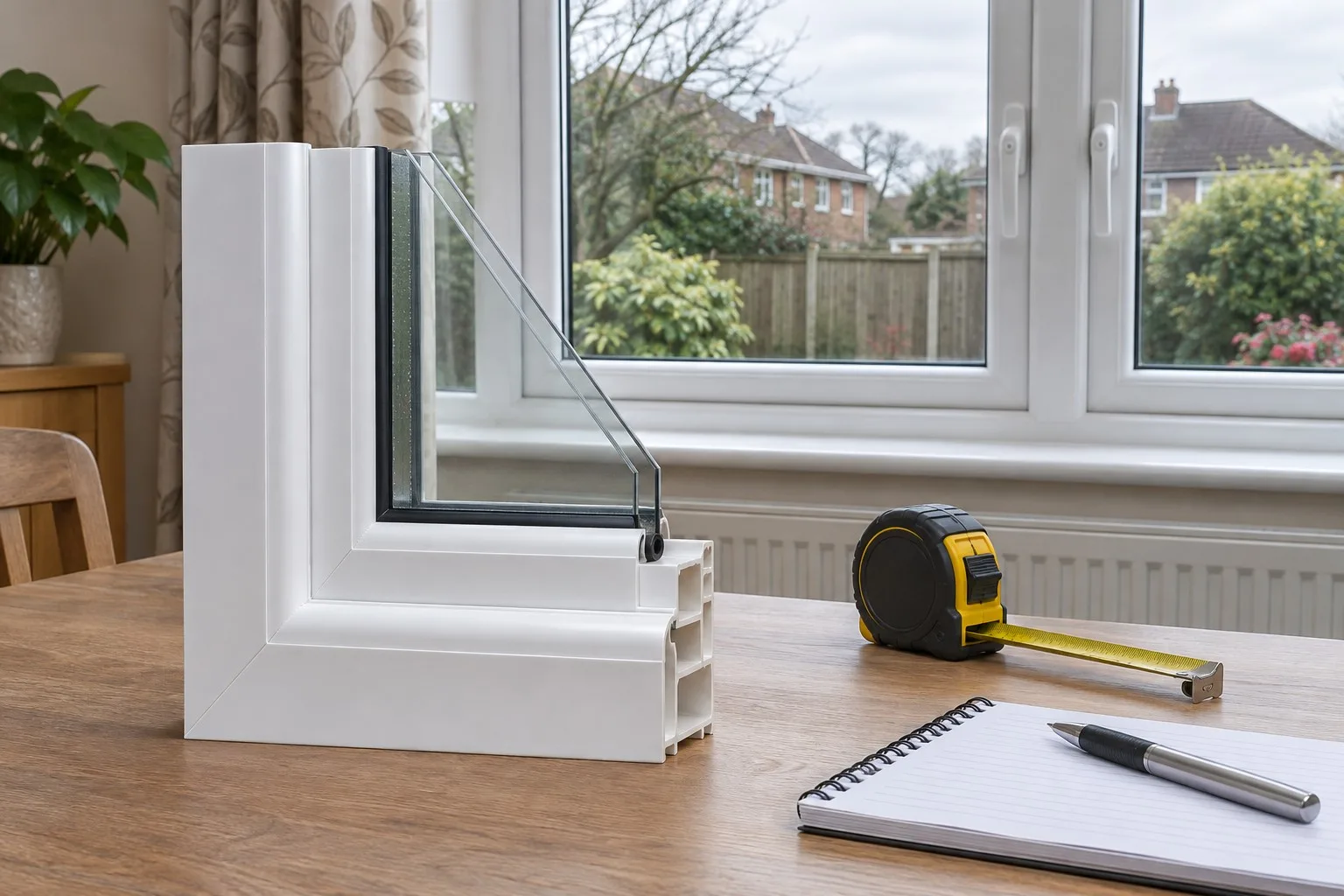
A window specification checklist is the list of things a quote should state in writing, so that you can compare two quotes like for like. Most quotes say “white uPVC double glazed windows”, and that tells you almost nothing. These are the details I’d ask for before I signed.
Why a window specification checklist matters
Two quotes for what sounds like the same windows can be a long way apart, and the difference often hides in the detail. The cheaper one may use a lighter frame, weaker locks, a shorter guarantee or no ventilation. Without the detail written down, you cannot tell.
I’d rather you ask any firm for the same list than take my word for one make, because the best choice depends on your house.
Frame and joints
Ask who makes the profile and which system it is, and whether the frame has steel or aluminium reinforcement where it needs it.
Ask how the corners are joined. In my experience most good windows are welded at every corner, and the weld is cleaned up after. I have seen firms make windows with some joints simply butted together and held with self-tapping screws, which is called mechanical jointing. I can’t cite a standard for the difference, but I’d want to know which I was paying for.
Beads, locks and hinges
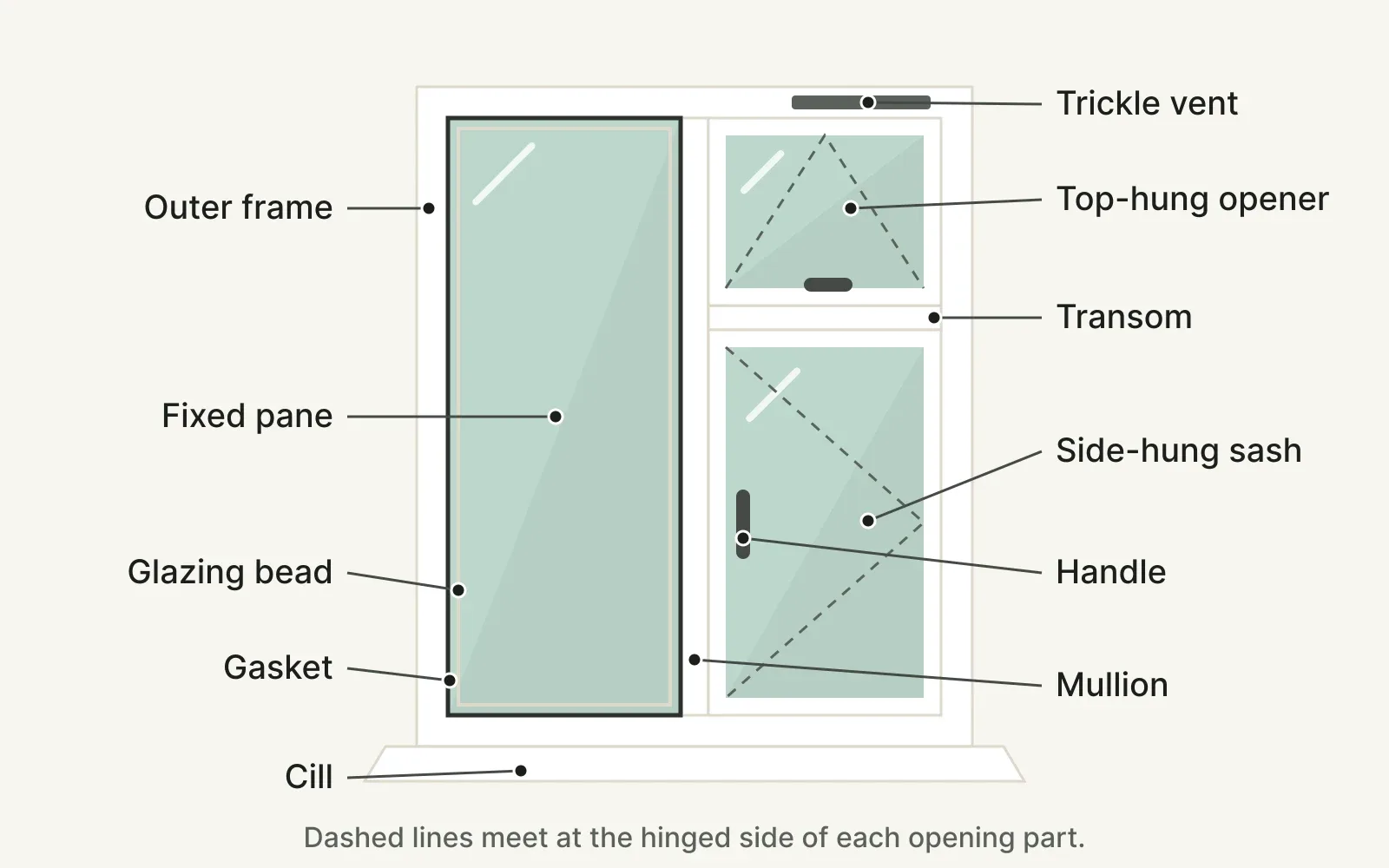
Ask whether the glazing beads are inside or outside the frame. In my view, inside beads are better, because no one outside can remove them. The detail is in our guide to window beading and security.
Ask what locks and hinges are fitted. As I say there, the number of locking points tells you less than the quality of the lock. Ask for each opening window’s lock to be described.
Glass and ventilation
Ask for the glass specification and the energy rating of the whole window, not only the glass. Our guide to the double glazing air gap explains what the figures mean, and our guide to sealed units covers how the glass is built.
Ask about ventilation. FENSA’s advice page notes that the need for background ventilation depends on the building and how it is ventilated now, and quotes Approved Document F as saying that where the original windows had trickle ventilators, the replacements should include them. The installer should work this out, and put the answer in the quote.
Guarantee and certification
Ask for the guarantee in writing. How long does it last, and what does it cover: materials, workmanship, the glass units, the hardware? Ask whether it is backed by an insurance policy, so that it holds if the firm stops trading. Our guide to buyer beware explains how the guarantee fits with the certificate.
Make sure your installer is registered with a scheme that can certify the work. For what to expect afterwards, and what to do if the paperwork goes missing, see lost FENSA certificate.
Care and maintenance
Frames are described as low maintenance, and not as no maintenance. In my experience the frames still want an occasional wash with warm water and a mild detergent, and the hardware wants a little light lubricant now and then. Your manufacturer’s instructions come first.
The checklist
- Make, system and colour of the frame, and any reinforcement.
- How the corners are joined.
- Beads inside or outside.
- Locks and hinges for each window.
- Glass specification and energy rating.
- Ventilation, and why.
- Guarantee: length, what it covers and who backs it.
- Registration and certificate.
- What is included in the price: removal, making good and disposal.
Put the quote through our quote checker with this list beside it.
Get quotes for your home
A guide price only takes you so far. Local firms can price the work on your own home, and comparing a few quotes is the quickest way to see what is reasonable.
Compare free quotes