Windows explained
Window beading and security
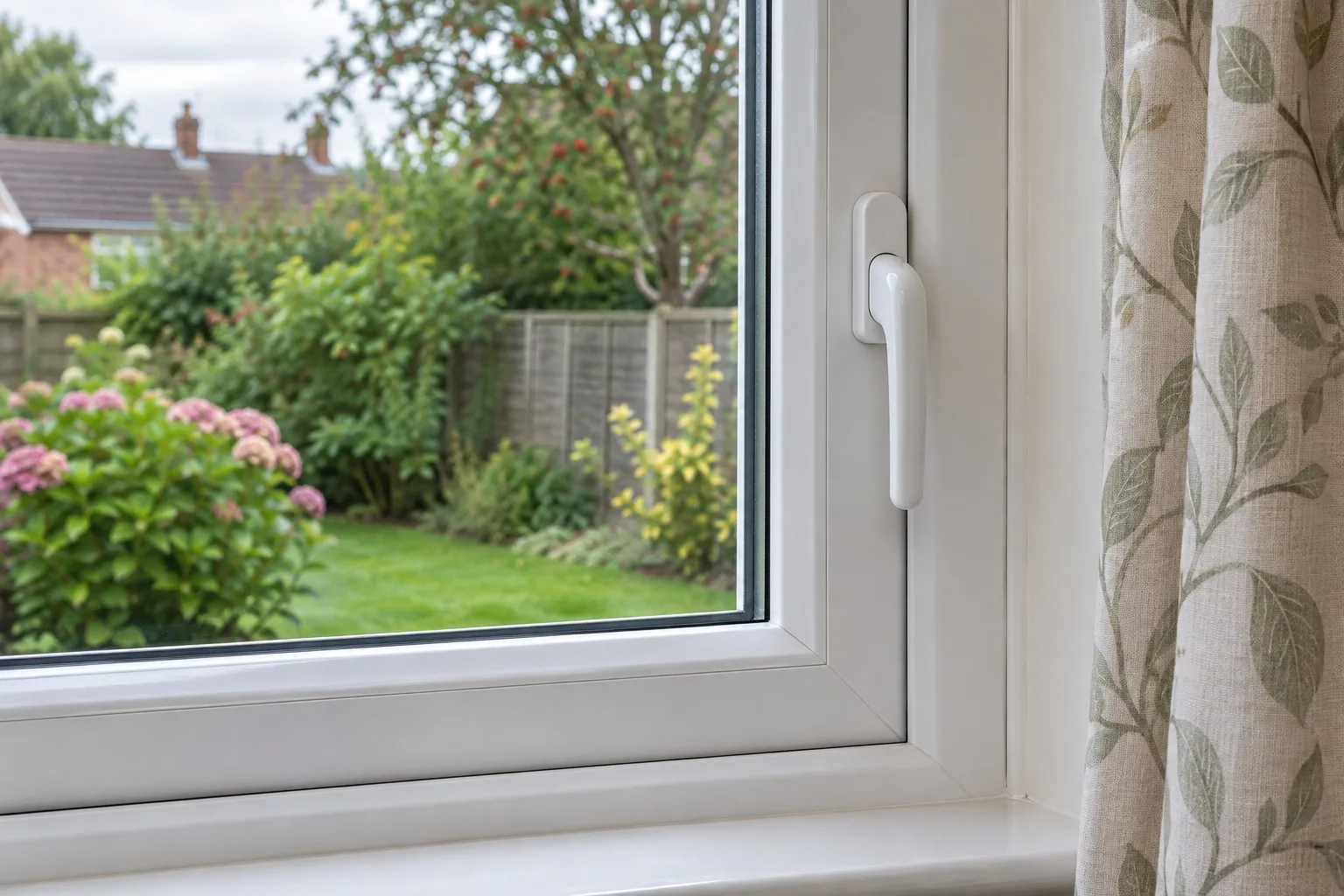
Window beading and security come down to one question: can the glass be taken out from outside? On a modern window the answer should be no, whether the beads are inside or out. It depends, though, on the type of bead and how the window is glazed. This is what I look at, and what I’d ask to see before you pay.
What glazing beads do
The beads are the strips that hold the glass in place. They have to be removable, because a unit has to come out when it fails or breaks. They are fixed on the inside or the outside of the frame. An installer explaining the subject, Door and Window Experts, points out that there are design reasons for external beads. A window with opening vents beside fixed panes is sometimes glazed one way for the opener. The fixed part is glazed the other way.
Window beading security: knock-in and security beads
The two types are worlds apart, and you need to know the difference if the beads are on the outside.
- Knock-in beads are fixed by tapping them into the frame. As far as I know they are mostly used in German window and door systems. If the bead is on the outside, they are easy to remove. The sealed unit then has to be stuck in from the inside with double-sided tape, so it can’t simply be lifted out once the bead has been prised off.
- Shuffle or security beads are different. The bead is released only after an internal wedge gasket has been removed. You must be inside before the glass can be moved back and the outside bead unclipped.
English-designed systems have commonly used shuffle beads, even in the days of aluminium frames. Older windows sometimes had a bulky, softer outside gasket that could be cut away with a knife. That allowed the bead to come out, but it is an old design. As far as I know, virtually all uPVC systems made today have beads with a gasket built in. They don’t share that weakness.
If your beads are inside, none of this applies.
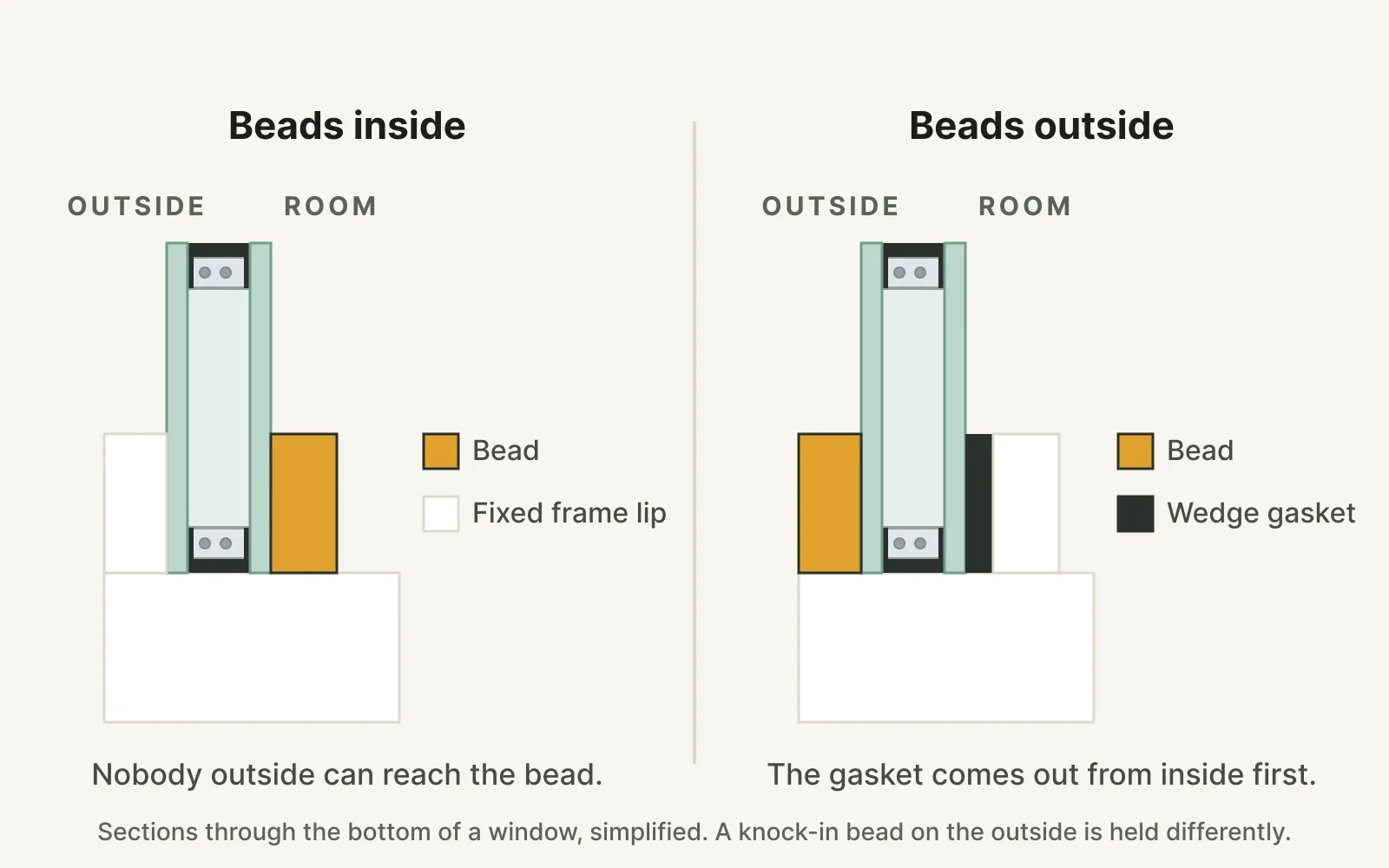
Window beading security: inside or outside beads
If you are being offered external beads, check which type is used in the system, and ask to see a corner sample. A corner sample shows how the beads are fitted. It tells you a lot about the security you will really have. An installer’s explainer says that modern externally beaded windows are safe. That is a vendor’s view, and I’d still ask which system is being used and see the sample.
Locks matter more than the number of points
When I am asked about locks, the question I like least is whether a window has a particular number of locking points. In my experience the number matters far less than the quality of the lock. Many multi-point locks that advertise a large number of points have extra roller cams. Those are designed to pull the window against the draught seals. They aren’t security points in any sense, and I often see them catching their keeps by very little.
Standards to look for
There is a test for the security of windows. Secured by Design describes the current standard as PAS 24:2022 +A1:2024, a method for testing and assessing the enhanced security performance of doorsets and windows of all material types. The test is designed to mimic an attack by an opportunistic burglar using tools that are easy to conceal.
If the supplier claims the window meets it, ask to see the test certificate. Ask whether it covers the window you are buying, with its frame, hardware and glazing. A certificate for a different window doesn’t help you.
Window beading security is not the whole story
In my opinion, the differences in security between the products on offer are smaller than the salespeople say. Almost all firms supply modern multi-point locking and security glazing methods. If your windows are old, new ones will probably be a big improvement. The weakest point of a home is also often not a window at all. So I’d satisfy myself about the beads and the locks. Then I wouldn’t base a buying decision on how impressed I was by the security pitch. The guide to the double glazing salesman explains how that pitch works. This is my opinion only.
What to ask before you order
- Are the beads inside or outside the frame?
- If outside, are they security beads with an internal gasket, or knock-in beads held with tape?
- Can I see a corner sample?
- What locks are fitted, and what are they, beyond the number of points?
- Is the window certified to PAS 24, and does the certificate cover this exact window?
For locks and glass in more detail, see doubleglazing.com’s guide to window security. Put any quote through our quote checker, and see windows explained for how the rest of a window goes together.
VELUX is a trade mark of its owner. The Window Man is independent and is not affiliated with, sponsored or endorsed by any manufacturer. We name brands only to help you compare like with like; see how we make money.
Get quotes for your home
A guide price only takes you so far. Local firms can price the work on your own home, and comparing a few quotes is the quickest way to see what is reasonable.
Compare free quotes